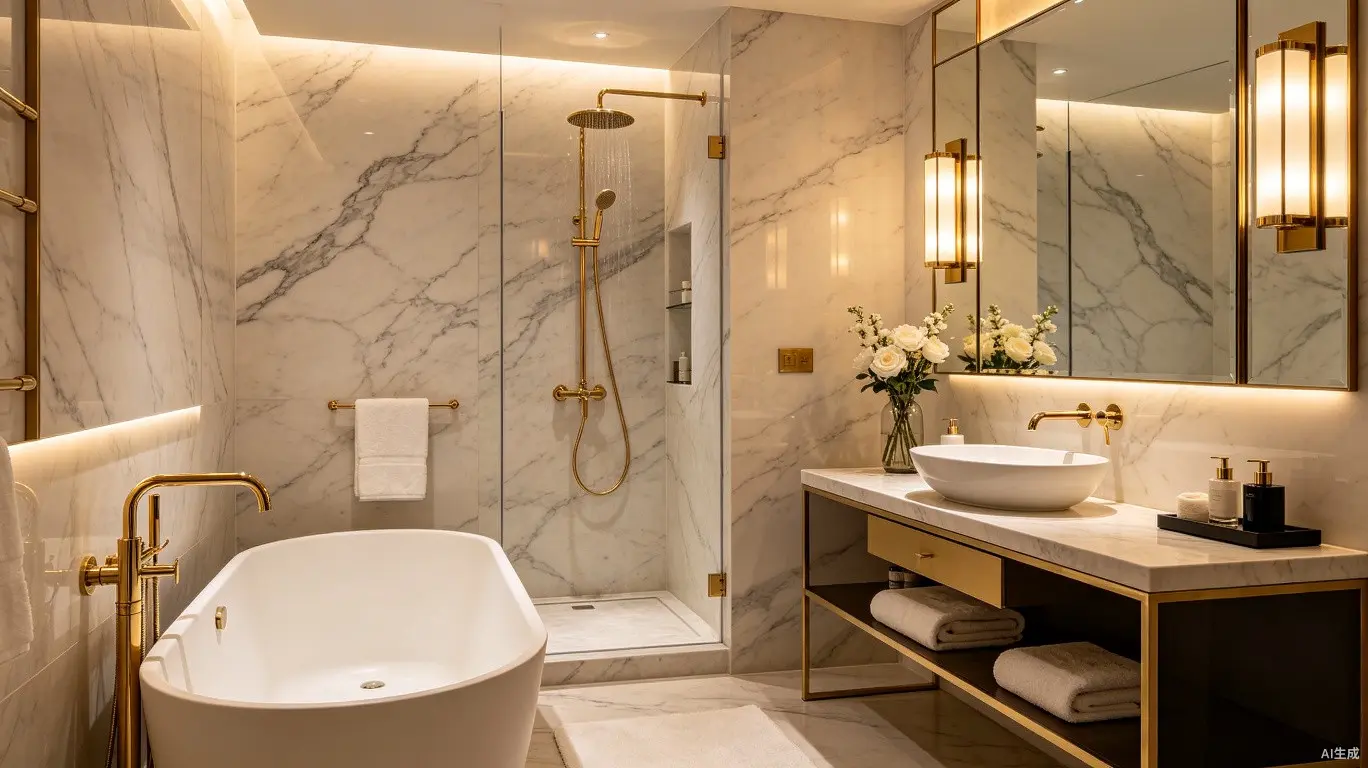

A luxury bathroom is not defined by square footage or marble surfaces -- it is defined by the quality and thoughtfulness of its fixtures. The right faucet, shower head, or tub elevates a daily routine into a restorative ritual. In 2026, bathroom fixture technology has advanced to the point where genuinely luxurious experiences are accessible at price points far below what was once reserved for ultra-premium custom homes.
The Shower Experience
1. A true rainfall shower head requires a minimum diameter of 25 centimeters and a flow rate of at least 9.5 liters per minute. Ceiling-mounted rainfall heads create the most immersive experience but require plumbing in the ceiling. Wall-mounted rainfall arms extending 40 to 50 centimeters from the wall are excellent retrofit alternatives.
2. Digital thermostatic shower valves have replaced traditional manual mixing valves as the must-have luxury feature. They allow setting your exact preferred temperature and maintain it regardless of water pressure fluctuations. The latest 2026 models can be controlled via smartphone, letting you start the shower from bed.
3. A secondary handheld shower on a slide bar is essential, not a luxury upgrade. It makes cleaning the shower trivial, allows seated showering, and is invaluable for washing children or pets. The slide bar should be mounted 120 to 150 centimeters from the floor with a 1.5-meter hose.
Bathtub Selection
4. Freestanding tubs are the visual centerpiece, but the practical experience varies by material. Acrylic tubs ($800 to $2,000) are lightweight and retain heat reasonably well. Stone resin composite tubs ($2,000 to $5,000) are heavier, more durable, and retain heat significantly longer -- only about 2 degrees of heat loss per hour versus 5 to 7 degrees in acrylic.
5. Soaking depth is the most important dimension for a bathtub. Standard tubs have 35 to 40 centimeters of depth, leaving shoulders and knees exposed. True soaking tubs have 50 to 60 centimeters, allowing full submersion. Japanese-style ofuro tubs are deeper than they are long and provide the most enveloping soak.
Faucets and Hardware
6. Finish selection has moved beyond chrome versus brushed nickel. In 2026, the most sought-after finishes include brushed gold, matte black, and polished nickel. The critical rule is consistency: all visible hardware should match in finish. A single chrome item in an otherwise brass bathroom stands out painfully.
7. Wall-mounted faucets create a clean, uncluttered countertop that is significantly easier to clean. The rough-in valve must be installed before tile, making this an early renovation decision. The spout should reach at least 18 centimeters from the wall to clear the sink basin.
Smart Toilets
8. Smart toilets with integrated bidet functionality have become the defining luxury bathroom fixture. Heated seats, warm water cleansing with adjustable temperature and pressure, warm air drying, automatic lid operation, and self-cleaning bowls with UV sterilization are available starting around $1,200.
9. Wall-hung toilets with concealed tanks create a minimalist look and free up floor space. The tank is hidden inside the wall with only the flush plate visible. Wall-hung toilets require a carrier system installed between wall studs, adding $300 to $600 to installation but making floor cleaning effortless.
Lighting and Ambiance
10. Integrated LED lighting in mirrors, niches, and under floating vanities transforms a bathroom from functional to spa-like at night. Shower niches with waterproof LED strips make items visible without harsh overhead light. Vanity toe-kick lighting provides gentle illumination for nighttime visits.
11. Chromotherapy -- colored light therapy integrated into showers and tubs -- has moved from novelty to legitimate wellness feature. Warm amber settings promote relaxation before sleep; cool blue settings energize for mornings. Chromotherapy systems with preset wellness programs are available for $300 to $800 in 2026.
Practical Luxury
12. Heated flooring is genuinely transformative and surprisingly affordable during a planned renovation. Electric radiant floor mats install under tile at $12 to $20 per square meter for materials. A programmable thermostat activating heat only during morning and evening hours adds $15 to $30 to the monthly electric bill.
13. A built-in steam shower converts an enclosed shower into a personal steam room. The steam generator installs in a nearby vanity or closet and connects via a steam pipe. The shower enclosure must be fully sealed, including the ceiling. A quality steam generator with digital controls costs $2,000 to $4,000.
14. A waterproof smart display or television in the bathroom is increasingly practical. A waterproof smart mirror displaying news, weather, and calendar streamlines the morning routine. For dedicated bath-watchers, a waterproof television on an articulating arm allows comfortable viewing from the tub.