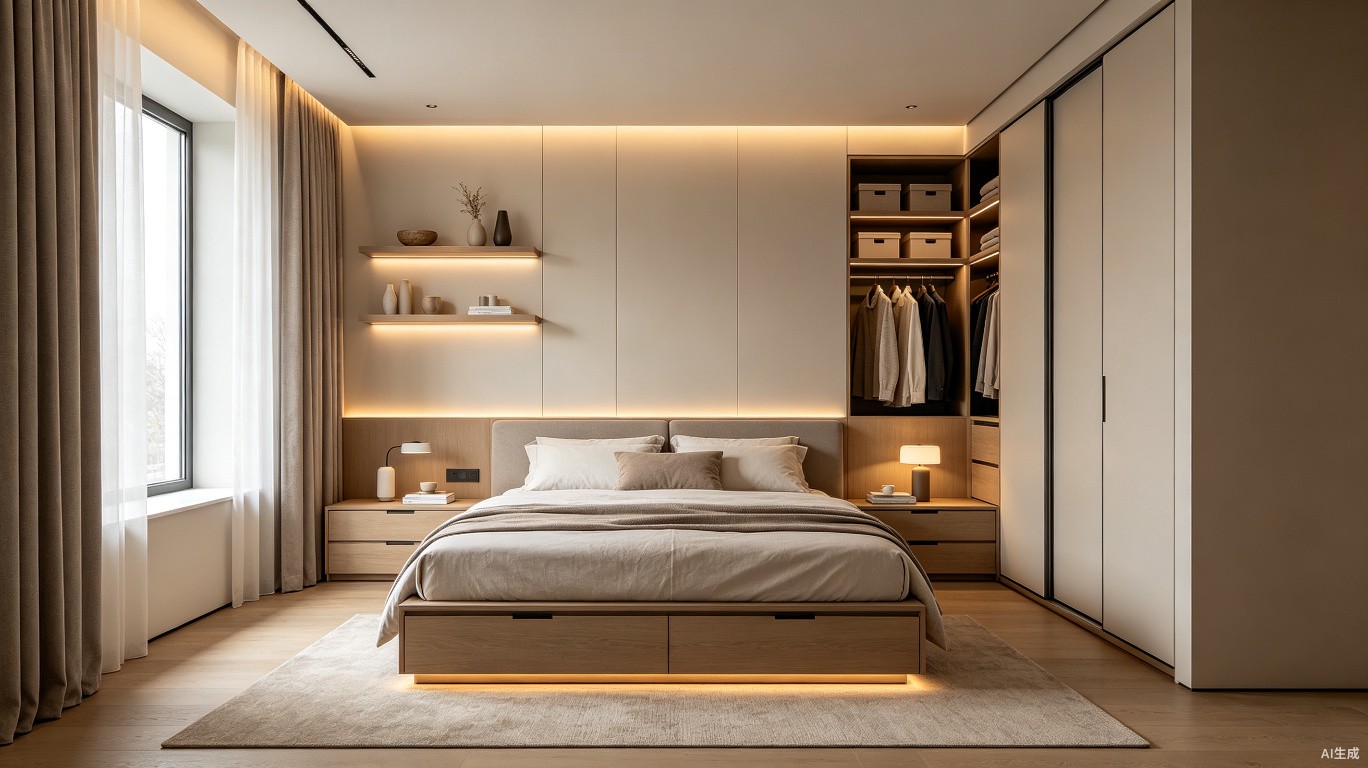

A cluttered bedroom undermines the very purpose of the space —rest and rejuvenation. Visual chaos triggers low-grade stress even when you are not consciously aware of it, and waking up to piles of clothing, scattered accessories, and overflowing surfaces sets a disorganized tone for the entire day. Professional organizers and interior designers agree that bedrooms present unique storage challenges because they must accommodate clothing, accessories, bedding, personal items, and often work or hobby supplies within a relatively modest footprint. We have gathered fifteen proven storage strategies that work across bedroom sizes and styles.
Under-Bed Storage Optimization
1. Under-bed storage is the most underutilized square footage in most bedrooms. A queen-size bed offers roughly 30 square feet of usable space beneath it, which is equivalent to a small closet. Rolling storage bins with lids are the simplest solution —look for containers no taller than 6 inches to fit under standard bed frames, and always choose clear bins so you can identify contents without pulling everything out. For seasonal clothing, vacuum-sealed compression bags can reduce volume by up to 75 percent, allowing you to store an entire winter wardrobe under the bed during summer months.
2. Platform beds with built-in drawers eliminate the need for under-bed bins entirely and provide a cleaner, more integrated look. Drawers on the sides of the bed are easier to access than those at the foot, which may be blocked by a bench or ottoman. When shopping for a platform storage bed, test the drawer glides in person —full-extension glides that allow drawers to open completely are worth the premium, as partial-extension drawers waste the back third of the storage space. Quality platform storage beds from brands like West Elm and Article range from $1,200 to $3,000.
3. A lift-up bed frame with a hydraulic piston mechanism provides the largest under-bed storage capacity —essentially the entire footprint of the mattress becomes a storage compartment. These mechanisms are surprisingly easy to operate, requiring only about 10 pounds of lifting force. However, lift-up storage is best suited for items you access infrequently, such as extra bedding, luggage, or off-season items, because you must clear the mattress surface each time you lift it.
Closet Systems and Wardrobe Design
4. Custom closet systems pay for themselves within two years through improved organization and reduced clothing damage. The key principle is to allocate hanging space based on actual need rather than default configurations. Most people need roughly 60 percent double-hang space for shirts and folded pants and 40 percent long-hang space for dresses and coats. Measure your existing wardrobe before designing a closet system —count how many linear inches of each hanging category you actually use, then add 20 percent for future growth. Modular systems from IKEA PAX or The Container Store Elfa range from $500 to $3,500 depending on size and configuration.
5. Double hanging rods instantly double the capacity of any closet section that is at least 84 inches tall. The upper rod should be mounted at 80 to 82 inches from the floor for shirts and folded pants, while the lower rod at 40 to 42 inches accommodates additional shirts or folded trousers. This configuration leaves roughly 12 inches of shelf space above the top rod for storage bins or rarely used items. Ensure at least 36 inches of depth in front of the closet for comfortable access to both rods.
6. Drawers and shelves inside the closet handle items that do not hang well —sweaters that stretch on hangers, activewear, accessories, and folded jeans. Soft-close drawer slides are worth the modest upcharge for preventing the jarring slam that rattles everything inside. Shelf dividers, which are acrylic or metal panels that slot into existing shelves, prevent stacks of sweaters or purses from toppling into each other. These dividers cost $8 to $15 each and solve one of the most persistent closet frustrations.
Vertical and Wall-Mounted Storage
7. Floor-to-ceiling wardrobes exploit the full height of the room and can increase storage capacity by 30 to 40 percent compared to standard 7-foot units. The uppermost shelves, which require a step stool to reach, are ideal for luggage, seasonal decor, and memorabilia that you access once or twice a year. When designing a floor-to-ceiling system, always include a dedicated step stool storage slot —a narrow vertical compartment that holds a folding step stool —so you never have to hunt for one when you need something from the top shelf.
8. Wall-mounted shelving above the headboard creates storage and display space in the most visible part of the bedroom without consuming floor area. A single floating shelf 8 to 10 inches deep, running the full width of the bed, can hold framed photos, small plants, and a few favorite books. For a more dramatic installation, consider floor-to-ceiling shelving on the wall opposite the bed, which serves as both storage and a design feature. Just ensure shelves are securely anchored into wall studs —a fully loaded 48-inch shelf can weigh 40 to 60 pounds.
9. Pegboard and slat wall systems, once relegated to garages and workshops, have gained traction in modern bedrooms as flexible, reconfigurable storage surfaces. A full-wall pegboard painted in a coordinating color can hold jewelry, hats, bags, and small shelves that can be rearranged as your needs change. The key to elevating pegboard from utilitarian to design-forward is to paint it the same color as the wall behind it, so the holes recede visually and the items on display become the focal point.
Dual-Purpose and Hidden Storage
10. Storage benches at the foot of the bed serve three functions: seating for putting on shoes, a surface for laying out tomorrow's outfit, and a generous storage compartment for extra blankets and pillows. Look for benches with a hinged top that opens on soft-close hydraulic struts for safety. Interior dimensions of at least 44 by 16 by 16 inches can accommodate two full-size blankets or four standard pillows. Upholstered storage benches from brands like Pottery Barn range from $400 to $900.
11. Nightstands with drawers rather than open shelves keep bedside clutter contained and out of sight. A nightstand with two drawers —one shallow for phone chargers, reading glasses, and a book, and one deep for personal items —transforms the bedside experience. For small bedrooms where standard nightstands consume too much floor space, consider wall-mounted floating nightstands with a single drawer, which free up floor area underneath for a laundry basket or additional storage bins.
12. A headboard with built-in storage recesses replaces the dead space behind the bed with functional compartments. These headboards typically have a central open shelf for a phone, a book, and a glass of water, flanked by smaller cubbies or closed compartments. This design is particularly valuable in bedrooms without nightstands, as the headboard itself becomes the bedside surface. Custom upholstered storage headboards cost $500 to $1,500 depending on size and fabric.
Seasonal and Rotation Strategies
13. Seasonal clothing rotation is the single most effective strategy for freeing up daily-use storage space. Move all out-of-season clothing —heavy coats and sweaters in summer, shorts and linen in winter —to under-bed bins, high closet shelves, or a separate storage area. This alone can free up 30 to 40 percent of your primary closet space. Use the seasonal switch as an opportunity to declutter: if you did not wear an item last season, donate or sell it rather than rotating it back into storage.
14. Vacuum-sealed storage bags are essential for bulky bedding items like down comforters, winter duvets, and spare pillows. A king-size comforter that occupies an entire shelf when stored conventionally compresses to roughly the size of a carry-on suitcase in a vacuum bag. However, avoid compressing down items for more than six months at a time, as prolonged compression can permanently flatten the down clusters and reduce insulating performance. Rotate vacuum-sealed items in and out annually to preserve their loft.
15. A dedicated donation box kept permanently in the bedroom closet is a deceptively simple organizational habit that prevents clutter from accumulating. Whenever you try on a piece of clothing and decide it no longer fits, suits your style, or sparks joy, drop it directly into the donation box. When the box is full —typically every two to three months —seal it and drop it at a donation center. This continuous culling process is far more sustainable than annual marathon decluttering sessions and keeps your wardrobe curated year-round.