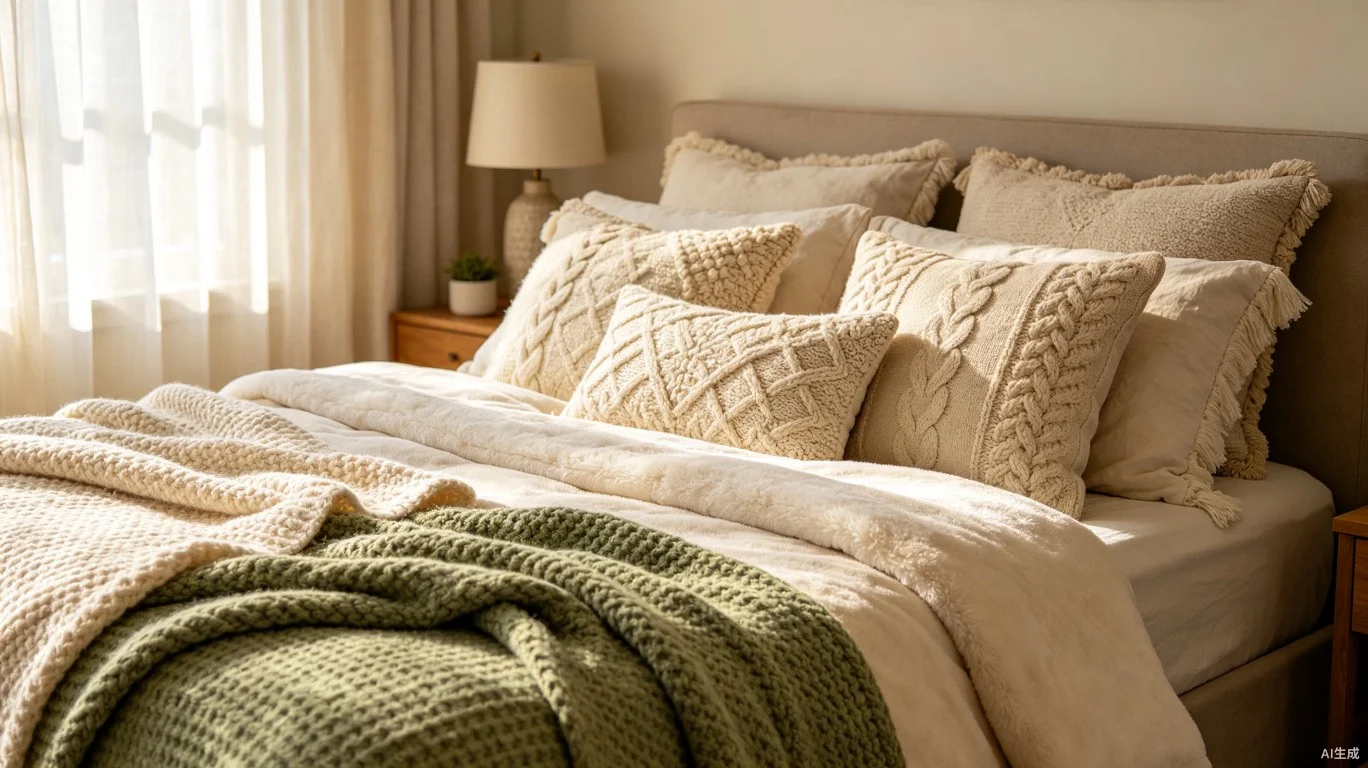

Textile layering is the secret ingredient that separates a merely functional bedroom from an irresistibly inviting sanctuary. The artful combination of sheets, blankets, duvets, throws, and pillows creates visual depth, tactile richness, and the kind of comfort that makes you want to linger. Here are fourteen expert tips for mastering bedroom textile layering.
Foundation Layers: Sheets and Bedding Basics
1. Start with high-quality sheets as your foundation layer. The sheet is the textile that touches your skin for eight hours every night, so invest accordingly. Long-staple cotton percale offers a crisp, cool feel ideal for warm sleepers, while cotton sateen provides a silky-smooth, warmer surface. Linen sheets excel at temperature regulation and develop a beautifully soft patina with each wash, though they come with a higher upfront cost.
2. Use a fitted sheet with deep pockets that fully encase your mattress, including any topper. Look for all-around elastic rather than just corner elastic for a secure fit that stays smooth through the night. For mattresses thicker than 14 inches, seek out extra-deep pocket sheets specifically labeled for pillow-top or Euro-top mattresses.
3. The flat sheet is the often-overlooked hero of layered bedding. In warmer months, a crisp flat sheet alone can be the perfect weight. In cooler months, it provides a smooth barrier between you and heavier blankets, preventing the irritation of coarse wool or textured weaves against your skin. Fold the top 12-18 inches back over your duvet or blanket to create a clean, hotel-style presentation.
The Mid-Layer: Blankets and Duvets
4. Choose a duvet insert based on fill power, not just brand. Fill power measures the loft and insulating ability of down: 600-700 fill power is excellent for most climates, while 800+ provides maximum warmth with minimal weight. Down alternative fills offer comparable warmth for allergy sufferers at a lower cost, though they tend to be heavier and less breathable than natural down.
5. Layer a lightweight blanket between your flat sheet and duvet for both visual and functional depth. A cotton herringbone or waffle-weave blanket in a contrasting hue adds texture visible at the foot of the bed when the duvet is folded back. This middle layer also allows for flexible temperature regulation -- on warm nights, you can push aside the duvet and use just the blanket.
6. For maximum versatility, use a duvet cover that can be changed seasonally. Lighter-weight linen or cotton covers in pale, breathable colors for summer; heavier cotton, velvet, or flannel covers in deeper, cozier tones for winter. A high-quality duvet cover protects your insert and dramatically changes the room's aesthetic in minutes for a fraction of the cost of a new duvet.
Throw Blankets: The Finishing Touch
7. Drape a throw blanket at the foot of the bed for the most impactful single layering addition. A chunky knit wool throw in winter adds irresistible texture; a lightweight cotton or linen throw in summer adds a casual, relaxed feel. The throw should extend across roughly two-thirds of the bed's width and hang down the sides for a natural, unstaged appearance.
8. Mix at least three textures across your bedding layers to create visual and tactile richness. For example, pair smooth sateen sheets with a matte linen duvet cover, topped with a nubby boucle throw and velvet accent pillow. The contrast between textures -- smooth, nubby, soft, crisp -- is what elevates layered bedding from ordinary to extraordinary.
9. Fold rather than toss your throw for a polished look. The simplest approach is a clean horizontal fold at the foot of the bed. For a more casual aesthetic, fold the throw lengthwise into thirds and drape it diagonally across one corner. A neatly folded throw signals intention and care, even when the rest of the room is relaxed.
Pillows: The Art of Arrangement
10. Build your pillow arrangement in layers from back to front, starting with sleeping pillows. Place two or four standard or king pillows upright against the headboard as your functional back row. Add two Euro shams (26x26 inches) in front for height and structure. Finish with two to three decorative accent pillows in varying sizes, shapes, and textures at the front.
11. Invest in pillow inserts one size larger than your sham covers. A 22-inch insert in a 20-inch cover, or a 28-inch insert in a 26-inch Euro sham, creates a plump, luxurious look that avoids the sad, deflated appearance of under-filled pillows. Down or down-alternative inserts maintain their shape better than polyester fill and can be fluffed back to life daily.
12. Use the rule of odd numbers for accent pillows. Three pillows in varying sizes, shapes, or textures create more visual interest than two or four symmetrical arrangements. Try combining a rectangular lumbar pillow, a square velvet accent, and a round textured pillow for a dynamic, designer-quality composition.
Window Treatments and Rugs
13. Layer window treatments for both function and softness. Combine sheer curtains for daytime privacy and light diffusion with blackout curtains or drapes for nighttime darkness and thermal insulation. Floor-to-ceiling curtains visually elongate the room and frame the bed beautifully. Mount the rod 4-6 inches above the window frame and extend it 8-12 inches beyond each side.
14. Anchor the bed with an area rug that extends at least 24 inches beyond each side and the foot. A rug underneath and around the bed defines the sleeping zone and adds another critical texture layer. For king beds, this means at minimum an 8x10 foot rug; for queen beds, a 6x9 or 8x10. The softness underfoot on cold mornings is a daily luxury worth the investment.