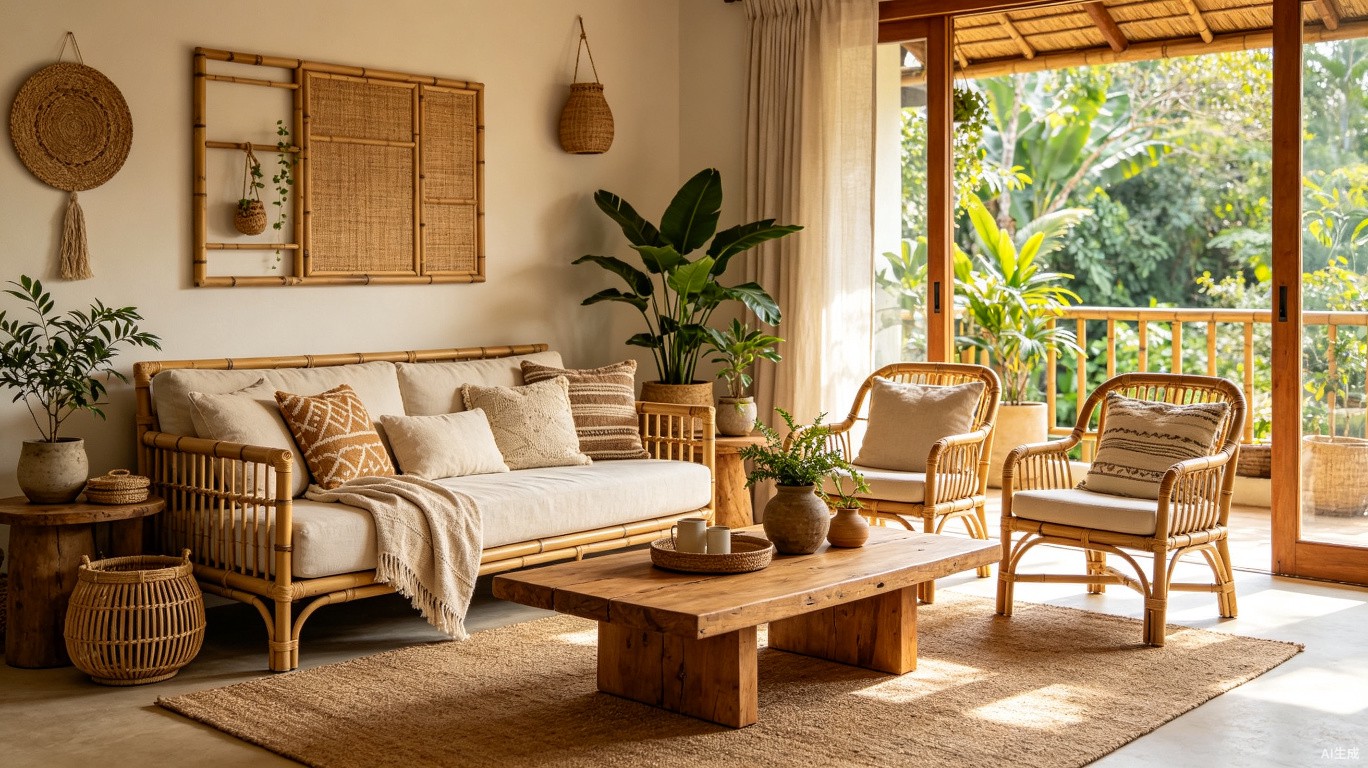

Sustainability in home decor has moved well beyond bamboo cutting boards and burlap accents. In 2026, eco-conscious decorating means making informed choices about materials, manufacturing processes, supply chains, and product longevity —without sacrificing aesthetics. The good news is that the market has responded to growing demand, and sustainable options now span every style from minimalist to maximalist, at price points from budget-friendly to investment-grade. Here are fifteen ways to make your home more environmentally responsible while keeping it beautiful.
Sustainable Materials and Fabrics
1. Organic cotton, linen, and hemp textiles are the foundation of an eco-friendly soft furnishings collection. Conventionally grown cotton accounts for roughly 16 percent of global insecticide use despite occupying only 2.5 percent of agricultural land. Organic cotton eliminates these chemicals and uses up to 91 percent less water through rain-fed farming practices. Hemp is an even stronger contender —it grows rapidly without pesticides, regenerates soil, and produces fibers that are three times stronger than cotton. Brands like Coyuchi, Boll & Branch, and Parachute offer GOTS-certified organic bedding and towels at prices 20 to 40 percent above conventional equivalents.
2. Recycled polyester, often labeled as rPET, transforms post-consumer plastic bottles into durable upholstery and curtain fabrics. Each yard of rPET fabric repurposes roughly 9 to 12 plastic bottles. The material is indistinguishable from virgin polyester in appearance and durability, and it costs approximately the same —$15 to $30 per yard. The environmental benefit is significant: rPET production uses 59 percent less energy and reduces CO2 emissions by 32 percent compared to virgin polyester. Brands like Inside Weather and Sabai Design build entire furniture lines around rPET upholstery.
3. FSC-certified wood ensures that furniture and decor items come from responsibly managed forests. The Forest Stewardship Council certification verifies that timber is harvested legally, with respect for indigenous rights and biodiversity. When buying wooden furniture, look for the FSC 100% label, which indicates all wood content comes from certified forests. The FSC Mix label means the product contains a blend of certified, recycled, and controlled wood. Many mainstream retailers, including West Elm and Crate & Barrel, now offer significant FSC-certified collections.
Low-Toxicity and Healthy Home Choices
4. Low-VOC and zero-VOC paints have transformed indoor air quality for eco-conscious homeowners. Volatile organic compounds are the chemicals that create that distinctive new-paint smell and can off-gas for weeks or months after application, contributing to headaches, respiratory irritation, and long-term health concerns. Zero-VOC paints from brands like Benjamin Moore Natura, Sherwin-Williams Harmony, and ECOS Paints perform as well as conventional paints in coverage and durability. The price premium is modest —typically $5 to $10 per gallon —and the health benefit is substantial, especially in bedrooms and nurseries.
5. Natural fiber rugs made from jute, sisal, seagrass, and wool are biodegradable, renewable, and free from the synthetic chemicals found in polypropylene and nylon rugs. Jute rugs offer a soft, golden-brown texture that suits casual interiors at an accessible price —$150 to $500 for an 8-by-10-foot rug. Wool rugs are more expensive at $800 to $3,000 for the same size but provide superior durability, natural stain resistance, and insulation. Look for rugs certified by GoodWeave, which guarantees no child labor in the supply chain, or the Woolmark certification for quality assurance.
6. Beeswax and soy candles burn cleaner than paraffin candles, which are derived from petroleum and release small amounts of toluene and benzene when lit. Soy candles made from 100 percent soybean wax (not a soy-paraffin blend) burn 30 to 50 percent longer than paraffin and produce minimal soot. Beeswax candles, while more expensive at $15 to $40 each, actually purify indoor air by releasing negative ions that bind to airborne particles. Check labels carefully —terms like "soy blend" or "natural wax" often indicate a mixture that still contains petroleum-derived paraffin.
Upcycling and Circular Design
7. Upcycled and reclaimed furniture tells a story while diverting materials from landfills. Reclaimed wood from old barns, factories, and shipping pallets carries a patina and character that new lumber cannot replicate. Each piece of reclaimed furniture is unique, with visible nail holes, saw marks, and color variations that add authenticity. The cost is comparable to high-end new furniture —$800 to $2,500 for a reclaimed wood dining table —but the environmental impact is dramatically lower. Etsy and Chairish are excellent sources for vintage and upcycled pieces, while local architectural salvage yards offer raw materials for DIY projects.
8. Modular furniture designed for disassembly and repair extends product lifespan and reduces waste. Unlike conventional furniture that is glued and stapled together, modular pieces use mechanical fasteners —screws, bolts, and brackets —that allow individual components to be replaced when damaged. If an armrest wears out or a leg breaks, you replace that component rather than the entire sofa. Brands like Burrow, Floyd, and Tylko have built their business models around modularity, and their products typically last two to three times longer than fast-furniture equivalents.
9. Secondhand and vintage shopping is arguably the most sustainable decorating strategy because it requires no new resources. Every vintage item purchased is one less new product manufactured, shipped, and packaged. Online platforms like Kaiyo, AptDeco, and VNTG specialize in authenticated pre-owned designer furniture at 30 to 60 percent off retail. For in-person treasure hunting, estate sales and consignment shops in affluent neighborhoods often yield high-quality furniture from brands like Herman Miller and Knoll at a fraction of the original cost.
Green Certifications and What They Mean
10. GREENGUARD Gold certification indicates that a product has been tested for over 10,000 chemicals and meets strict limits for VOC emissions in indoor environments. This certification is particularly important for furniture, mattresses, and decor items placed in bedrooms and children's rooms, where occupants spend the most consecutive hours. GREENGUARD Gold certified products include brands like Medley, Avocado, and Naturepedic. The certification is voluntary, so its presence is a reliable signal of a manufacturer committed to indoor air quality.
11. OEKO-TEX Standard 100 certification verifies that every component of a textile product —from the fabric to the thread to the zipper —has been tested for harmful substances. This is the most widely recognized textile safety certification globally, with over 200,000 certificates issued. For home textiles like bedding, towels, and curtains, OEKO-TEX certification provides assurance that the products do not contain formaldehyde, heavy metals, or allergenic dyes. Most major home textile brands now carry this certification on at least part of their product line.
12. Cradle to Cradle certification evaluates products across five categories: material health, material reutilization, renewable energy use, water stewardship, and social fairness. It is one of the most rigorous sustainability certifications, requiring manufacturers to design products that can be fully recycled or composted at end of life. Products earn one of five achievement levels —Basic, Bronze, Silver, Gold, or Platinum —and must be recertified every two years. Furniture and decor items with Cradle to Cradle Silver or higher represent the gold standard of sustainable manufacturing.
Practical Eco-Friendly Habits
13. Biophilic design integrates indoor plants as a decorating strategy that also improves air quality. NASA's Clean Air Study identified several houseplants that remove benzene, formaldehyde, and trichloroethylene from indoor air, including peace lilies, snake plants, and spider plants. A living wall or a cluster of large potted plants serves as both decor and natural air filtration. Beyond air quality, the presence of plants has been shown to reduce stress, lower blood pressure, and improve concentration —benefits that extend well beyond sustainability.
14. Energy-efficient window treatments contribute to a home's overall environmental footprint. Cellular shades, also known as honeycomb shades, trap air in their pleated cells to create an insulating layer that reduces heat loss in winter and heat gain in summer by up to 40 percent. When paired with motorized systems that automatically adjust based on temperature and sunlight, these shades pay for themselves through reduced energy bills within two to three years. Brands like Hunter Douglas and Bali offer cellular shades in a wide range of colors and opacity levels.
15. A minimalist approach to decorating —buying fewer, better-quality items —is inherently sustainable. The average American household contains over 300,000 items, many of which are decorative objects purchased on impulse and discarded within a year. Before buying any decor item, apply a simple test: will you still want this in your home five years from now? If the answer is no, or if the item is trend-driven and likely to feel dated, skip it. The most sustainable decor is the decor you never need to replace.