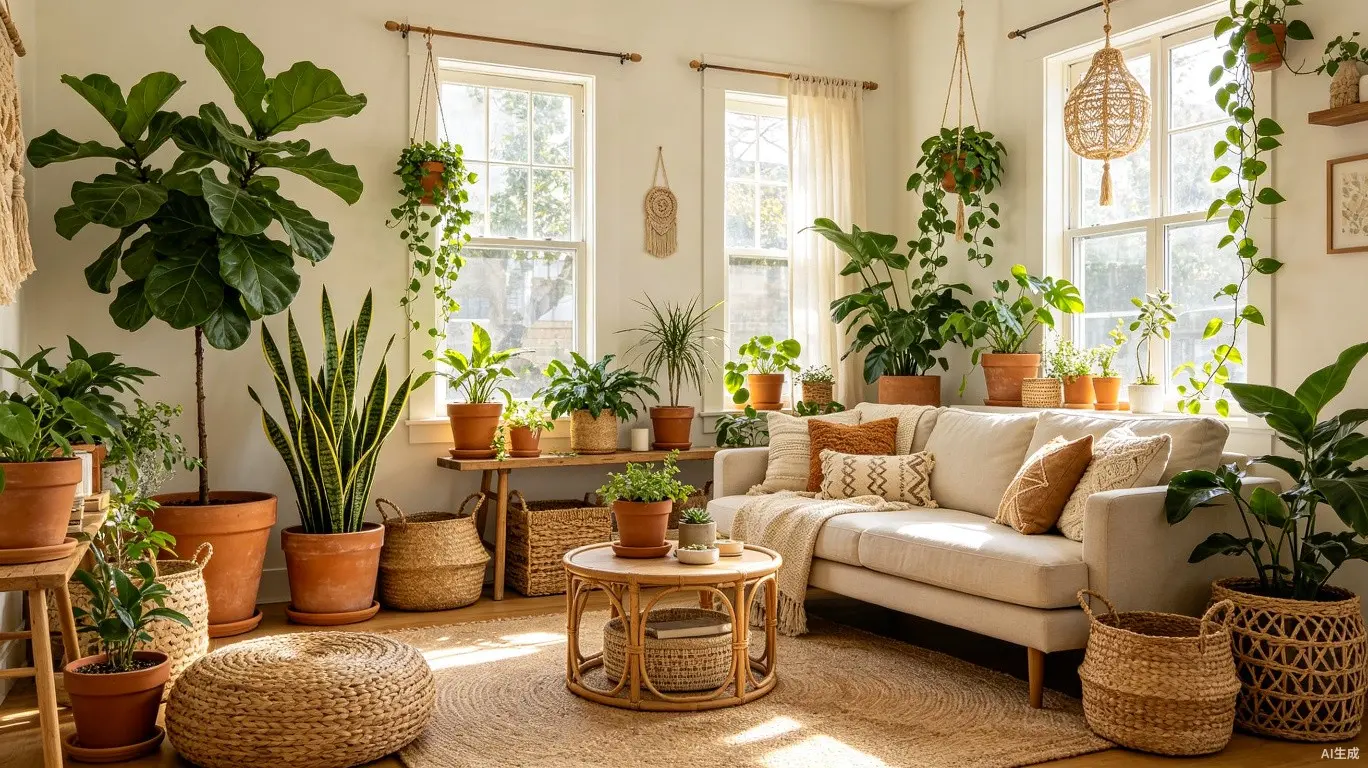

Indoor plants are the most versatile and affordable design tool available. They add color, texture, and life to any room, improve air quality, reduce stress, and make even the most minimalist spaces feel warm and inhabited. But placing a random potted plant on a windowsill is not the same as designing with plants. Here are fifteen professional tips for styling indoor plants like an interior designer.
Plant Selection by Light Condition
1. The first and most important rule is matching the plant to the light, not the other way around. A south-facing window receives bright direct light suitable for succulents and fiddle leaf figs. East-facing provides bright indirect light ideal for monsteras and philodendrons. North-facing offers low light where snake plants and ZZ plants survive. Measure light with a smartphone app before purchasing.
2. The fiddle leaf fig remains the iconic statement plant but is unforgiving of inconsistent care. It requires bright indirect light, humidity above 40%, and a strict watering schedule. For dramatic presence without the drama, the rubber plant in burgundy or variegated varieties offers a similar silhouette with greater tolerance.
3. For windowless bathrooms and dark corners, the snake plant is nearly indestructible, tolerating weeks of neglect and light as low as 50 lux. The ZZ plant thrives on neglect with glossy dark leaves. The cast iron plant earned its name honestly -- it survived Victorian parlors with gas lighting and minimal sunlight.
Placement and Grouping Strategies
4. Plants should be distributed at multiple heights throughout a room. A tall plant like a fiddle leaf fig anchors a corner at floor level. Medium-height plants on stands fill the mid-range. Trailing plants on shelves or hanging from the ceiling draw the eye upward. A room with plants at only one height feels flat.
5. Grouping plants in odd numbers -- three, five, or seven -- creates a cohesive vignette. Place the tallest at the back or center, the shortest in front, and vary pot materials for visual interest. Clustering also creates a beneficial microclimate of higher humidity as grouped plants release moisture through transpiration.
6. The "thriller, filler, spiller" formula works beautifully indoors. The thriller is a tall dramatic plant. Fillers are medium-height bushy plants filling visual space around the thriller. Spillers trail over edges, like string of pearls or pothos.
Pot and Planter Selection
7. The planter is as important as the plant. A beautiful plant in a cheap plastic nursery pot undermines the entire look. Terracotta brings warmth; matte ceramic in neutral tones offers contemporary style; woven baskets add organic texture. Always use a nursery pot inside decorative planters for drainage.
8. Oversized floor planters make a far stronger statement than multiple small pots. A single 60-centimeter-tall planter holding a mature monstera commands attention. The planter should be roughly one-third the height of the overall plant.
Room-by-Room Strategy
9. In the living room, plants should frame seating areas. A tall plant at each end of a sofa creates balance. Small plants on a console table behind the sofa add depth. Avoid plants that obstruct traffic flow or television viewing.
10. Kitchen plants should be practical as well as decorative. Herbs thrive on sunny windowsills. Trailing plants on top of upper cabinets soften the hard line where cabinets meet ceiling, making the ceiling feel higher.
11. Bedroom plants should prioritize species that release oxygen at night. Snake plants and aloe vera continue photosynthesizing at night. Lavender and jasmine have documented calming effects. Avoid strongly fragrant flowering plants if you are scent-sensitive.
Care and Maintenance
12. Overwatering kills more indoor plants than any other cause. Most houseplants prefer soil to dry out partially between waterings. Test with your finger: if the top 2 to 5 centimeters feels dry, water thoroughly until it drains from the bottom. Empty the saucer after 30 minutes.
13. Dust on leaves reduces photosynthesis and dulls appearance. Large-leaved plants should have leaves wiped with a damp microfiber cloth monthly. For small-leaved plants, a lukewarm shower twice a year removes dust and pests. Never use leaf shine products.
Problem Solving
14. Yellow leaves, brown tips, and leaf drop each tell a specific story. Yellowing lower leaves usually indicate overwatering. Brown crispy tips indicate low humidity or salt buildup. Sudden leaf drop often signals environmental shock from moving the plant or a cold draft.
15. Pest infestations are manageable if caught early. Spider mites leave fine webbing; treat with insecticidal soap applied every five to seven days for three weeks. Fungus gnats indicate wet soil; let the top 5 centimeters dry completely. Scale insects appear as brown bumps; remove manually with rubbing alcohol.