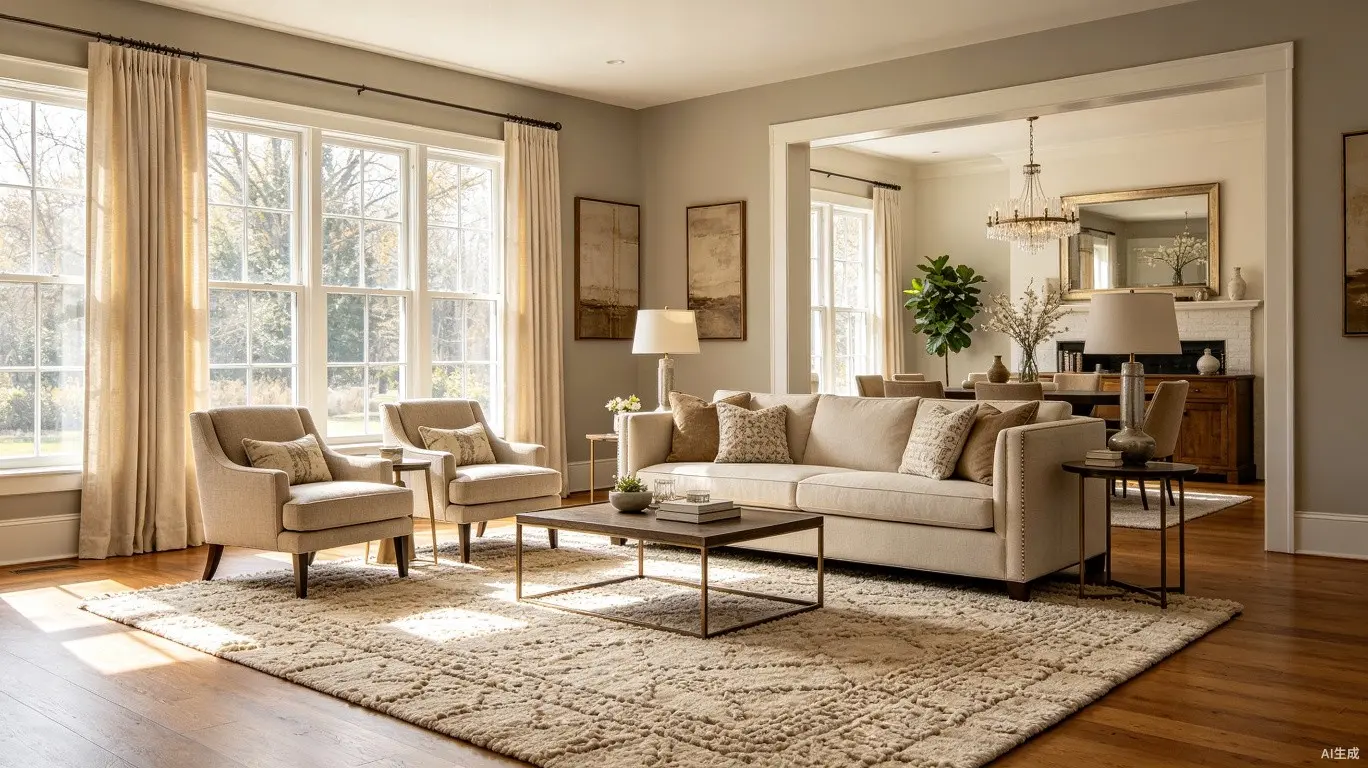

A properly sized and positioned rug is the single most transformative element in a living room design. It anchors the furniture arrangement, defines the conversation zone, adds warmth and texture underfoot, and can make a room feel either expansive or cramped depending on a few critical decisions. Here are fourteen expert tips that will help you get every detail right.
Sizing Fundamentals
1. The most common and costly rug mistake is choosing one that is too small. A living room rug should extend at least 15 to 25 centimeters beyond the front legs of all major seating pieces. When a rug only touches the coffee table with sofas floating off the edges, the room feels disconnected and visually smaller. The rug must physically and visually unite the seating group.
2. For a standard three-seat sofa arrangement in a medium living room, a 240 by 340 centimeter rug provides the right proportions. This size allows the sofa front legs, side chairs, and coffee table to sit fully on the rug while leaving 45 to 60 centimeters of bare floor around the perimeter. This negative space frames the rug and prevents the room from feeling carpeted wall-to-wall.
3. In open-plan spaces where the living area has no walls to define its boundaries, the rug becomes the room's floor plan. The rug should be large enough that all furniture in the seating zone sits at least partially on it, creating a clear visual boundary between the living area and adjacent dining or kitchen zones.
Placement Strategies by Layout
4. The all-legs-on approach works best in larger rooms and formal settings. All four legs of the sofa, all chairs, and the coffee table sit entirely on the rug, creating a defined, luxurious zone. This requires a rug at least 300 by 400 centimeters for a standard seating arrangement and works best in rooms where the rug can be centered with generous margins on all sides.
5. The front-legs-on approach is the most versatile and widely recommended placement strategy. The sofa and chairs sit with their front two legs on the rug, back legs off, while the coffee table is fully on. This arrangement visually connects the furniture without requiring an oversized rug and allows for more flexibility with oddly shaped rooms.
6. For L-shaped sectional sofas, the rug should be oriented to match the longer dimension of the sectional. Place the rug so the longer side runs parallel to the longest section of the sofa, with the rug extending at least 30 centimeters beyond the chaise or ottoman portion. The coffee table should sit fully on the rug, centered in the L's inner corner.
Shape Selection
7. Rectangular rugs are the default and most versatile choice, but orientation matters. In a long, narrow living room, orient the rug parallel to the longest wall to emphasize length. In a square room, a square rug centered under a square coffee table creates pleasing symmetry. Round rugs work brilliantly under round dining tables or in entry-adjacent living areas where they soften angular furniture.
8. A round rug can be a brilliant problem-solver in challenging layouts. In a living room with an awkward corner, a bay window, or a curved sofa, a round rug softens hard angles and creates a natural gathering spot. A 240-centimeter diameter round rug can anchor a loveseat and two chairs beautifully.
Layering and Texture
9. Layering rugs -- placing a smaller, more decorative rug on top of a larger, neutral foundation rug -- has become a signature designer technique. The base rug should be a natural fiber like jute or sisal in a neutral tone, large enough to anchor all furniture. The top rug, typically a vintage or patterned piece, should be at least 30 centimeters smaller on all sides.
10. Rug texture and pile height should be chosen with practical daily use in mind. High-pile shag rugs feel luxurious but are difficult to clean and trap allergens. For high-traffic living rooms, low to medium pile rugs in wool or synthetic blends offer the best balance of comfort, durability, and cleanability. Flatweave rugs like kilims are virtually indestructible.
Material Guide
11. Wool rugs are the gold standard for living rooms, offering natural stain resistance, flame retardancy, and decades of durability. Wool fibers have a natural crimp that resists crushing under furniture legs and bounces back after vacuuming. A quality hand-knotted wool rug can last 50 years or more.
12. Synthetic fiber rugs made from polypropylene, polyester, or nylon offer affordable alternatives with excellent stain resistance. Modern synthetic rugs can convincingly mimic wool and silk at a fraction of the cost, making them ideal for households with young children, pets, or tight budgets. The trade-off is a shorter lifespan of 5 to 10 years.
Practical Considerations
13. A non-slip rug pad is essential, not optional. A quality rug pad prevents slipping on hard floors, adds cushioning that extends rug life, and provides sound insulation. The pad should be approximately 5 centimeters smaller than the rug on all sides so it remains invisible. Felt and rubber combination pads offer the best performance.
14. Rug placement should account for door swings, traffic paths, and heating vents. A rug that interferes with a door's swing arc will quickly become frustrating. The main walking path should not require stepping on and off the rug's edge, which creates a tripping hazard. Floor heating vents should never be covered by a rug.