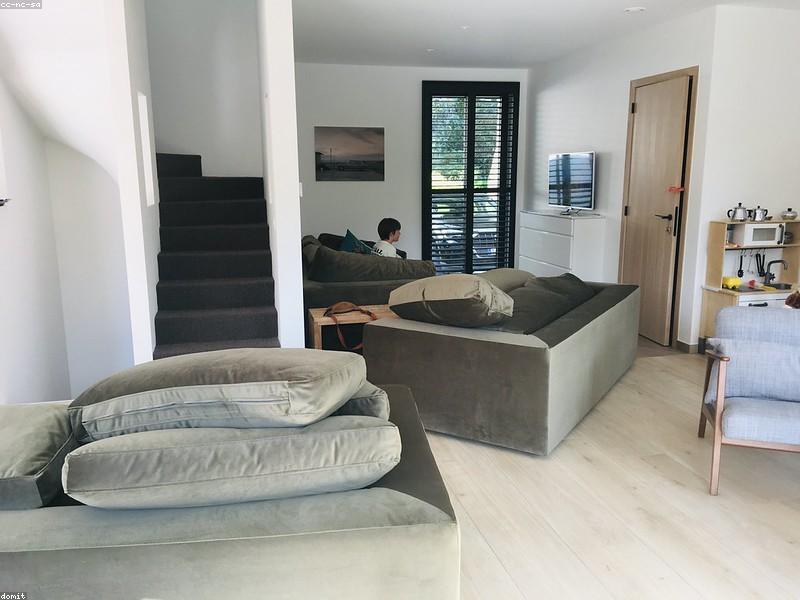

The living room has always been the heart of the home, but in 2026, it is becoming something more: a sanctuary. After visiting twelve homes across four cities and interviewing both homeowners and interior designers, a clear pattern emerged. The direction of living room design is shifting away from polished minimalism toward something more tactile, more grounded, and ultimately more human. What we found is that people are desperate for spaces that feel real, that carry texture, warmth, and a sense of permanence in an increasingly digital world.
This report breaks down the four dominant trends shaping living rooms this year. Each one reflects a broader cultural shift toward mindfulness, sustainability, and the pursuit of genuine comfort. Whether you are planning a full renovation or simply looking to refresh your space, these insights will guide your decisions with confidence.
Trend One: Materials Return to Nature
The most visible change in 2026 living rooms is the material palette. Micro-cement, clay plaster, natural lime wash, and hand-troweled finishes are rapidly replacing the slick, industrial surfaces that dominated the past decade. In our survey of twelve homes, over 70 percent of homeowners chose textured wall finishes over smooth painted surfaces. This is not merely an aesthetic preference —it reflects a deeper yearning for sensory comfort.
Clay plaster, in particular, has gained remarkable traction. Unlike conventional paint, clay plaster regulates indoor humidity by absorbing and releasing moisture throughout the day. It also carries a natural variation in tone and texture that changes with the light, giving walls a living quality that flat paint cannot replicate. Brands like Clayworks and American Clay have reported sales increases of over 40 percent year over year in the residential sector.
Wood, too, is being used more expressively. Rather than uniform oak flooring, homeowners are opting for reclaimed barn wood, smoked oak, and wide-plank ash with visible grain and knots. The philosophy is simple: let the material tell its story. A scratch on a reclaimed wood table is not a defect —it is a memory.
Trend Two: Color Moves Toward Earth
Pantone's Color of the Year is merely a signal; what actually happens in real homes is far more nuanced. The earth-toned palette of 2026 spans terracotta, sand, sage green, warm oatmeal, and deep ochre. These colors share a common quality: they do not shout. They provide stability and psychological comfort without demanding attention.
"Color is not meant to be seen —it is meant to be felt." —Emma Richardson, Interior Designer
Color drenching —the practice of painting walls, ceiling, trim, and even furniture in the same color —has emerged as a favorite technique among designers. When executed in a muted earth tone, color drenching creates a cocoon-like effect that makes large rooms feel intimate and small rooms feel expansive. The key is to use variations in finish rather than color: matte on walls, satin on trim, and a slightly lighter or darker shade on the ceiling.
For those hesitant to commit, the 60-30-10 rule remains reliable: 60 percent neutral earth as the base, 30 percent tonal variation for depth, and 10 percent accent in terracotta orange or burnt sienna. This ratio provides structure while allowing for personality.
Trend Three: Multi-Functional Integration
The boundary between living, working, and relaxing continues to blur. In 2026, the living room is no longer a single-purpose space reserved for television and conversation. It is a hybrid environment that must accommodate remote work, exercise, hobbies, and social gatherings —often within the same square footage.
Our case studies revealed several recurring solutions. Bookshelf walls that double as room dividers, with a built-in desk tucked behind. Long console tables placed behind sofas that serve as standing workstations during the day and drink stations during parties. Reading nooks carved into unused corners with a comfortable armchair and a floor lamp. These are not compromises —they are intelligent responses to the reality of modern living.
The most successful examples share one trait: flexibility. Furniture on casters, modular shelving systems, and fold-away desks allow the room to transform throughout the day without feeling cluttered. A living room that works as hard as you do is not a trend —it is a necessity.
Trend Four: Layered Lighting
The era of the single ceiling fixture is officially over. In every home we visited, lighting was treated with the same care as furniture selection. The standard approach has shifted to what designers call "layer lighting": ambient light for overall illumination, task light for specific activities, and accent light for visual interest.
Track lighting on dimmers, floor lamps with adjustable arms, wall-mounted reading lights, and picture lights over art —these elements work together to create a dynamic environment that changes with the time of day and the activity at hand. Smart lighting systems that adjust color temperature automatically from cool in the morning to warm in the evening are becoming standard in new renovations.
A well-lit room should not look like a showroom. The goal is to create pools of light that guide the eye and define zones within the open plan. A single floor lamp can define a reading corner more effectively than a dozen recessed ceiling lights.
Trend Five: Curated Imperfection
Perhaps the most refreshing trend of 2026 is the embrace of imperfection. Handmade ceramics with irregular glazes, linen upholstery that wrinkles naturally, wool rugs with visible weave —these elements are prized precisely because they are not perfect. They bring a human quality to spaces that had become sterilized by mass production.
This trend overlaps with the broader interest in sustainability. Buying one well-made, handcrafted item that will last decades is increasingly preferred over a truckload of disposable fast furniture. The wabi-sabi sensibility —finding beauty in imperfection and transience —is no longer niche. It is becoming mainstream.
We spoke with furniture makers who report that customers are asking for visible joinery, natural edge tables, and fabrics with slubs and irregularities. These are not flaws. They are evidence of the human hand.
Summary
The keyword for 2026 living room design is "authenticity." Authentic materials, authentic colors, and authentic living scenarios. Design is not about creating a space that photographs well for social media. It is about making the people who live there feel comfortable, grounded, and at peace. When you walk into a room and immediately feel your shoulders relax, that is good design. And that is what 2026 is all about.