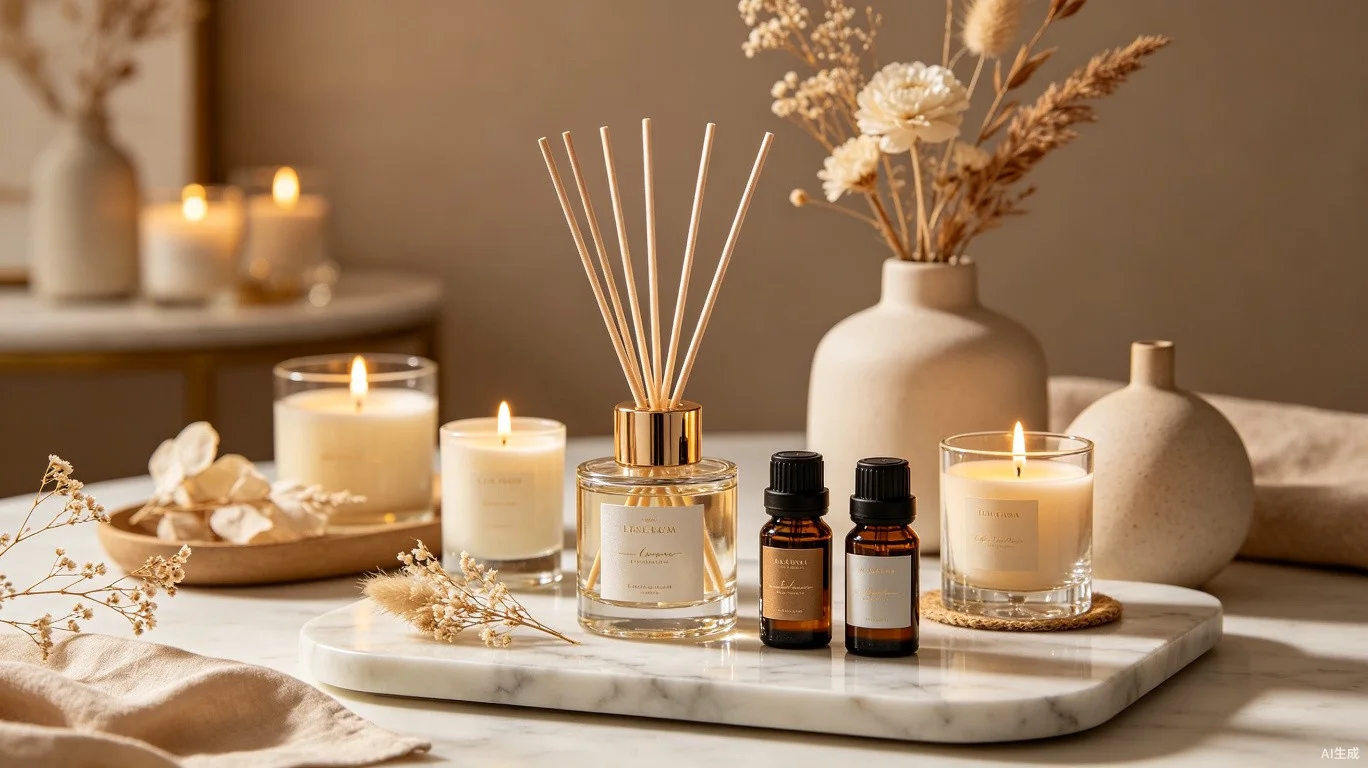

Home fragrance is the invisible layer of interior design, capable of transforming the mood of a space as powerfully as lighting or color. A thoughtfully scented home feels more luxurious, more welcoming, and more intentionally designed. Here are thirteen expert tips for elevating your home fragrance experience.
Understanding Fragrance Types
1. Candles remain the gold standard of home fragrance for their combination of scent, warmth, and ambiance. Luxury candles use a high concentration of fragrance oils (typically 8-12%) in a natural wax base (soy, coconut, or beeswax). The flame creates a gentle convection current that circulates fragrance throughout the room, and the visual flicker adds an irreplaceable element of coziness.
2. Reed diffusers provide continuous, flame-free scent perfect for spaces where candles are impractical -- hallways, bathrooms, and homes with children or pets. The reeds draw fragrance oil up through capillary action and release it into the air. Flip the reeds weekly to refresh the scent intensity, but be aware that each flip shortens the diffuser's lifespan by dispersing more oil.
3. Ultrasonic essential oil diffusers use water and vibration to create a fine, cool mist carrying essential oils into the air. Unlike heat diffusers, ultrasonics preserve the therapeutic properties of essential oils and simultaneously add humidity, making them especially valuable in dry climates or during winter heating season.
Scent Selection and Layering
4. Choose fragrances based on the function and mood of each room. Citrus and herbal scents (bergamot, rosemary, grapefruit) energize and focus, ideal for home offices and kitchens. Floral and green scents (jasmine, lavender, eucalyptus) soothe and calm, perfect for bedrooms and bathrooms. Woody and spicy scents (cedar, sandalwood, vanilla) create warmth and intimacy, best for living rooms and entryways.
5. Understand fragrance families to build a cohesive home scent profile. Top notes (citrus, herbs) hit immediately and evaporate within 15-30 minutes. Heart notes (florals, spices) emerge after the top notes fade and last 2-4 hours. Base notes (woods, resins, vanilla) provide depth and can linger for 6-12 hours. A well-composed fragrance balances all three levels.
6. Layer scents across different delivery methods for depth and complexity. In a living room, combine a woody candle on the coffee table with a citrus diffuser on a shelf and a floral room spray for occasional refreshment. The different scent release rates (immediate from spray, continuous from diffuser, periodic from candle) create a dynamic, evolving fragrance experience.
Quality and Placement
7. Invest in higher-concentration fragrances for larger rooms. A 200g luxury candle with 10% fragrance oil concentration will scent approximately 250-300 square feet. For open-plan spaces exceeding 500 square feet, either use multiple candles spaced throughout the area or opt for a nebulizing diffuser, which disperses pure essential oil without dilution for maximum coverage.
8. Position fragrance sources away from HVAC vents, open windows, and direct sunlight. Air currents from vents and windows rapidly disperse scent before it can fill the room, while direct sunlight melts candles unevenly and degrades essential oils. The ideal position is at the room's natural air flow intersection, typically where hallway air meets room air.
9. Rotate fragrances seasonally to align with the natural rhythm of the year. Light, green, and citrus scents for spring (lilac, fresh-cut grass, lemon verbena); bright, tropical, and marine scents for summer (coconut, sea salt, gardenia); warm, spicy, and earthy scents for autumn (pumpkin, clove, amber); and rich, woodsy, and resinous scents for winter (pine, frankincense, leather).
Maintenance and Technique
10. Trim candle wicks to 1/4 inch before each burn to ensure a clean, even melt pool and prevent soot. The first burn is critical -- let the candle burn until the entire surface is liquid wax (typically one hour per inch of diameter) to prevent tunneling, where wax builds up around the edges of the container. A candle that tunnels will waste up to 40% of its wax.
11. Replace reed diffuser oil and reeds every 2-3 months, not just the oil. Reed pores eventually become clogged with dust and oil residue, dramatically reducing fragrance output even when oil remains. Fresh reeds in fresh oil will produce noticeably stronger scent. For a mid-cycle refresh, flip only half the reeds to avoid an overwhelming scent spike.
12. Use room sprays as instant scent boosters, not primary fragrance sources. A room spray's scent lasts 15-60 minutes, making it perfect for pre-guest arrival freshening or post-cooking odor neutralization. Spray upward into the center of the room rather than directly onto surfaces to allow the fine mist to disperse evenly as it falls.
13. Create a signature home scent by combining two to three complementary fragrances from the same brand. Most luxury fragrance houses design their collections to be layered. Try pairing a floral candle with a woody diffuser, or a citrus spray with an herbal candle. The combination creates a unique olfactory identity that guests will unconsciously associate with your home.