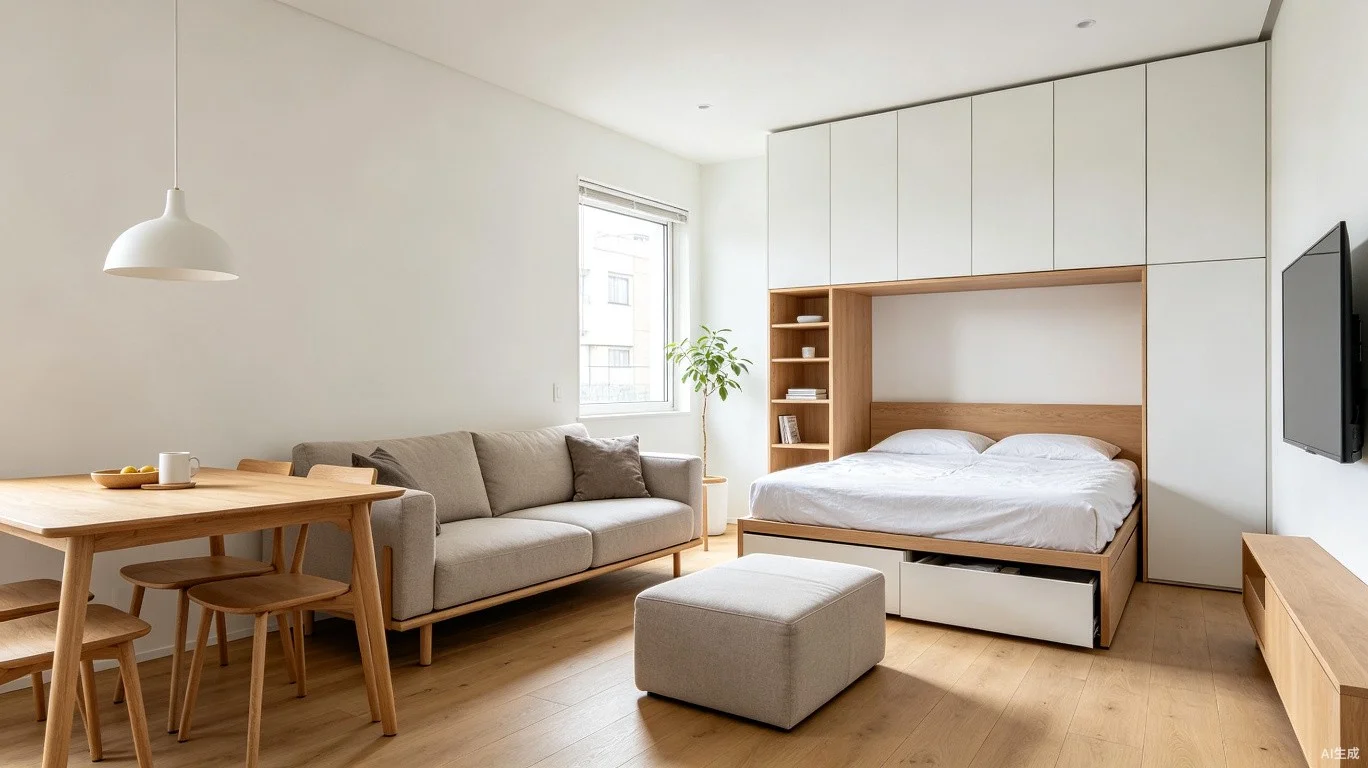

In compact homes, every piece of furniture must earn its place by doing more than one job. Multi-functional furniture is not just about saving space -- it is about creating a home that adapts to your life throughout the day. Here are fourteen expert tips for choosing and using transformative furniture in small spaces.
Sofa Beds and Convertible Seating
1. Modern sofa beds have shed their reputation for uncomfortable mattresses and clunky mechanisms. High-end sofa beds now feature memory foam or pocket-coil mattresses up to 6 inches thick, rivaling dedicated beds in comfort. Look for models with a simple pull-out mechanism (no folding bars to wrestle with) and a mattress that does not require removal of the seat cushions to deploy.
2. Daybeds with trundles offer the most versatile sleeping solution for multi-purpose rooms. The daybed functions as a sofa during the day and the trundle pulls out to create either a king-size sleeping surface (when positioned beside the daybed) or two separate twin beds. Choose a daybed with a solid back and arms for comfortable upright sitting, not just a metal frame designed for sleeping.
3. Modular sofas that can be reconfigured into different arrangements provide long-term flexibility unmatched by fixed-section sofas. Individual pieces can be separated into chairs for entertaining, combined into a large lounger for movie nights, or arranged as a guest bed. Some modular systems include ottomans that double as extra seating when guests arrive.
Storage-Integrated Furniture
4. Ottoman storage beds are the most effective space multiplier in any small bedroom. A hydraulic lift mechanism provides access to the entire under-bed area -- equivalent to a 4-foot-wide wardrobe -- while being far easier to operate than drawers that require clearance space. The storage is ideal for out-of-season clothing, extra bedding, and bulky items that would otherwise consume closet space.
5. Storage stairs that replace traditional ladders for loft beds and bunk beds turn every step into a pull-out drawer. Each stair drawer provides approximately 1.5-2 cubic feet of storage -- collectively equivalent to a small dresser. For children's rooms, labeling each drawer with its contents teaches organization while making the most of limited floor space.
6. Nesting tables are the original multi-functional furniture, providing up to three surfaces that occupy the footprint of one. When entertaining, spread them around the room for guests to place drinks. When alone, stack them compactly beside the sofa. Choose nesting tables with at least 4 inches of height difference between each tier so the smaller tables can slide fully underneath without catching.
Transformable Dining
7. Extendable dining tables with built-in extension leaves eliminate the need for stored leaf panels that are always in the way when not in use. Butterfly leaf mechanisms store the extension inside the table itself, deploying with a simple pull on each end. A table that seats 2-4 daily and expands to seat 8-10 for gatherings provides the best balance of everyday compactness and entertaining capacity.
8. Drop-leaf or gateleg tables mounted against a wall serve as a slim console 90% of the time and a full dining surface when needed. With both leaves down, the table is 10-16 inches deep. With both leaves up, it provides seating for 2-4. Wall-mounted versions that fold completely flat when not in use are the ultimate space-savers, requiring zero floor space when stored.
9. Convertible coffee tables that rise to dining height contain a hidden gas-spring mechanism that lifts the tabletop from 18 inches (coffee table height) to 30 inches (dining height) in seconds. Paired with floor cushions or low stools that stow underneath, this setup allows the living room to become a dining room without dedicating square footage to a permanent dining table.
Room Dividers That Work Harder
10. Open shelving units used as room dividers create defined zones in studio apartments while providing essential storage. A 12-inch-deep shelving unit placed perpendicular to a wall can separate sleeping and living areas without blocking light. Choose units with back panels on only the bottom half to maintain privacy for the sleeping zone while keeping the upper portion open and airy for light transmission.
11. A Murphy bed with an integrated desk or sofa on the front face transforms a bedroom into a home office or living room during the day. Modern Murphy bed mechanisms are counterbalanced and require minimal effort to lower and raise. The best designs include built-in shelving on either side that remains accessible whether the bed is up or down, maximizing storage in the wall cavity.
12. Folding screens with hooks, pockets, or shelves add storage and conceal clutter in open-plan spaces. A three-panel screen can define a dressing area in a studio while holding jewelry, scarves, and accessories on one side and presenting a decorative surface on the other. Choose lightweight screens you can move easily as your needs change throughout the day.
Smart Selection
13. Prioritize furniture on casters or with lightweight construction that enables easy reconfiguration. Furniture on locking casters can be repositioned for different activities -- a kitchen cart that serves as a prep surface by day can roll into the living area as a bar cart for evening entertaining. In spaces smaller than 400 square feet, the ability to rearrange quickly is more valuable than any single fixed layout.
14. Measure doorways, hallways, and staircases before purchasing multi-functional furniture, especially pieces that transform. A sofa bed that opens to a queen mattress requires approximately 85 inches of clear depth -- more than the length of the sofa itself. Similarly, an extendable dining table needs corresponding chair clearance in its extended position. Tape out the extended footprint on your floor before buying.