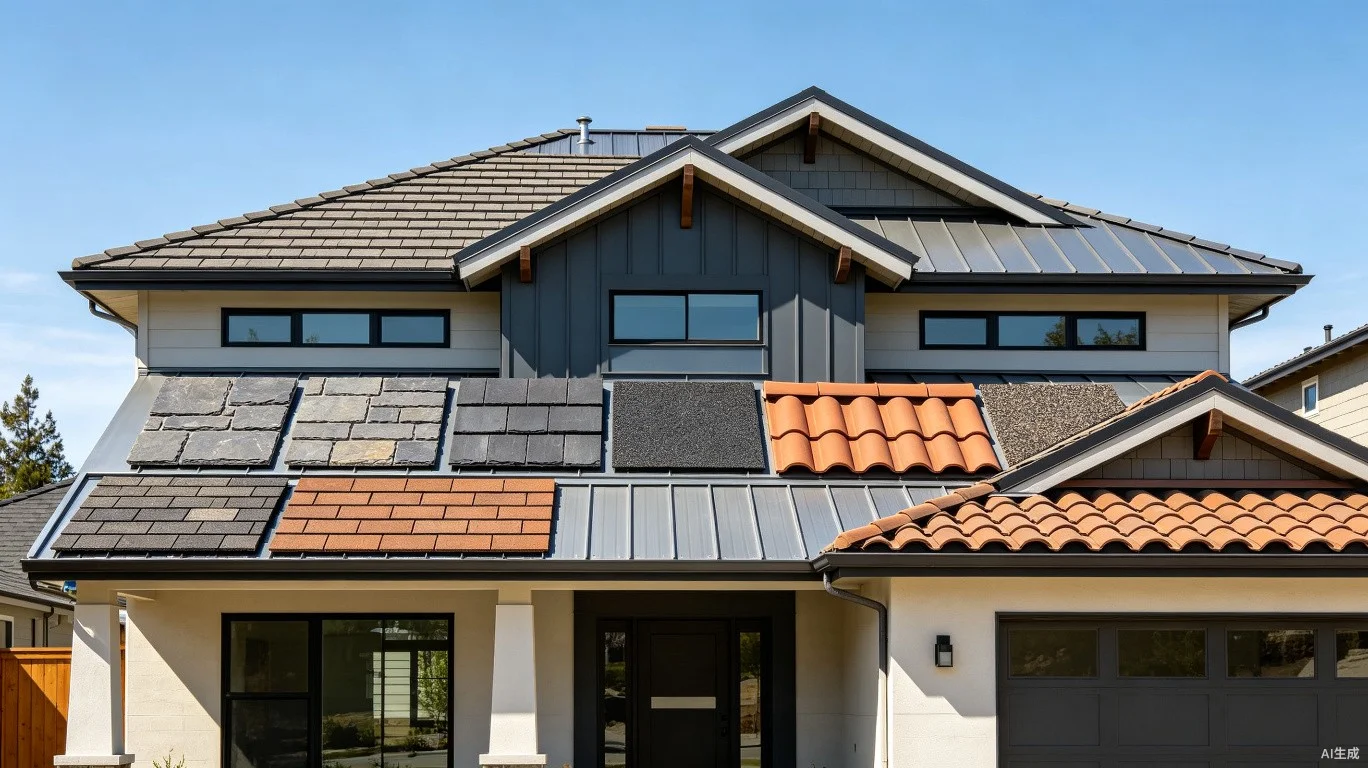

Your roof is your home's first line of defense against the elements and one of the most expensive components to replace. Choosing the right roofing material involves balancing durability, aesthetics, cost, and climate considerations. Here are thirteen expert tips comparing the most popular roofing materials.
Asphalt Shingles
1. Asphalt shingles dominate the North American market, covering roughly 80% of homes. Architectural (dimensional) shingles now outsell traditional three-tab shingles thanks to their thicker construction, longer warranties (30-50 years vs. 15-25), and more attractive textured appearance. Architectural shingles cost $4.50-8.50 per square foot installed.
2. Impact-resistant (Class 4) asphalt shingles are worth the premium in hail-prone regions. These shingles use a polymer-modified asphalt that flexes rather than cracks under impact. The upgrade typically adds $1,000-2,000 to a roof replacement but can reduce homeowner insurance premiums by 5-35% depending on the insurer and location.
3. Cool-roof asphalt shingles with reflective granules can reduce attic temperatures by 20-30 degrees Fahrenheit in summer. The granules reflect a higher percentage of solar radiation, reducing cooling loads and extending the life of the roofing material. The upcharge is modest ($0.50-1.00 per square foot), and the energy savings often recover the cost within 3-5 years in warm climates.
Metal Roofing
4. Standing seam metal roofing has surged in popularity, now accounting for approximately 15% of the residential roofing market. Made from steel or aluminum with a Kynar 500 PVDF coating, standing seam roofs last 40-70 years and are fully recyclable at end of life. Installed costs range from $10-18 per square foot, roughly 2-3 times asphalt shingles but with double or triple the lifespan.
5. Metal roofs excel in fire-prone regions, carrying a Class A fire rating (the highest) and preventing ember penetration that ignites wood-framed roofs. Many California and Colorado insurers now offer significant premium reductions for Class A metal roofing in wildfire-urban interface zones. The non-combustible surface also sheds snow efficiently, reducing ice dam risk.
6. Noise from metal roofing is largely a myth when properly installed over solid decking with underlayment. The metal panel is attached to the roof sheathing, not suspended, so the drumming sound of rain on a bare metal shed does not translate to a residential installation. If additional sound dampening is desired, a high-quality synthetic underlayment adds negligible cost and measurable noise reduction.
Tile and Slate
7. Concrete and clay tile roofs dominate Mediterranean, Spanish Colonial, and Southwestern architecture. Clay tiles last 50-100+ years and develop a beautiful patina with age. However, they weigh 600-1,200 pounds per square (100 sq ft) and often require structural reinforcement, adding significant cost beyond the $12-20 per square foot for the tiles and installation.
8. Natural slate is the longest-lasting roofing material, with properly installed slate roofs routinely lasting 75-200 years. The slate itself is essentially indestructible -- the limiting factor is the metal flashing and fasteners, which typically need replacement every 75-100 years. At $20-40+ per square foot installed, slate is the most expensive option and requires specialized installers.
9. Synthetic slate and shake tiles made from recycled rubber and plastic composites offer the aesthetic of natural materials without the weight, fragility, or cost. Synthetic slate weighs roughly 25% of natural slate and costs $8-12 per square foot installed. While warranties typically range from 30-50 years, the material has not existed long enough to verify real-world 50-year performance.
Choosing for Your Climate
10. In hot, sunny climates, choose roofing with high solar reflectance and thermal emittance. Light-colored metal roofing, white membrane roofing for flat roofs, and cool-roof asphalt shingles significantly reduce cooling costs. The Cool Roof Rating Council maintains an independent database of certified cool roofing products with measured reflectance and emittance values.
11. In cold, snowy climates, metal roofing outperforms asphalt because its smooth surface sheds snow rapidly, preventing the heavy snow accumulation that can cause structural stress. Install snow guards above entryways and walkways to prevent sudden snow slides that can injure people or damage landscaping below.
12. In coastal and high-wind areas, choose roofing rated for your wind zone. Metal roofing with concealed fasteners (standing seam) and properly nailed architectural shingles with six nails per shingle (not the standard four) can withstand winds exceeding 130 mph. Verify that your installer follows the manufacturer's high-wind installation instructions explicitly.
13. Regardless of material, proper underlayment is as important as the roofing itself. Synthetic underlayments have largely replaced traditional felt paper, offering superior tear resistance, reduced weight, and better walkability during installation. In regions prone to ice dams, install ice and water shield membrane along eaves, valleys, and around penetrations for at least 24 inches past the exterior wall line.