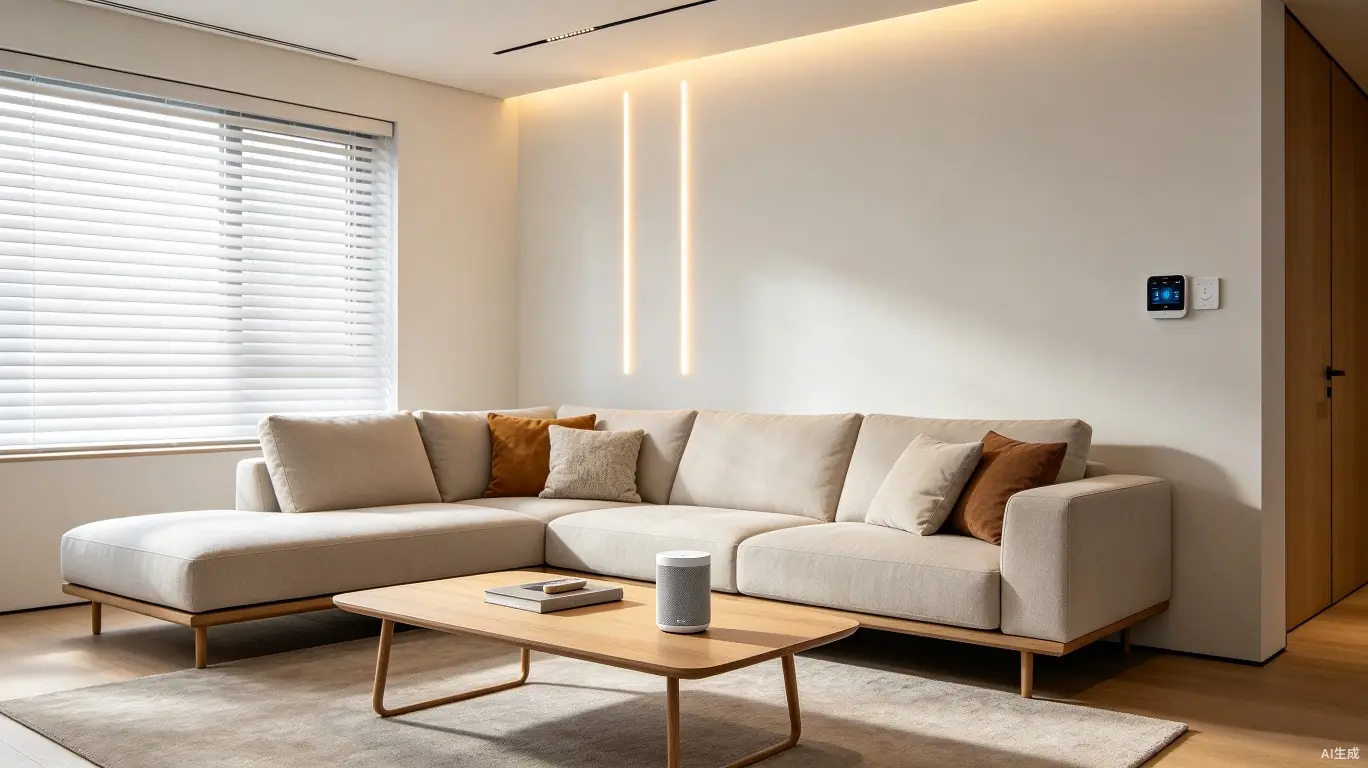

Smart home technology has crossed the chasm from hobbyist novelty to practical household tool. In 2026, the best smart gadgets are not the ones with the most features — they are the ones that solve real, everyday problems reliably and disappear into the background of daily life. The Matter protocol, now adopted by all major manufacturers, means cross-platform compatibility is finally a reality rather than a promise. Here are fourteen smart home devices across every category that deliver genuine value, ranked by practical impact rather than technical specs.
Climate and Energy Management
1. Smart thermostats have become so capable and cost-effective that a non-smart thermostat is difficult to justify in 2026. The latest generation from Ecobee and Nest learns your schedule, detects occupancy room by room via remote sensors, and integrates with time-of-use electricity pricing to pre-cool or pre-heat your home during off-peak hours. The average household saves 12 to 23 percent on heating and cooling costs, recovering the $150 to $250 thermostat cost within the first year. Installation takes under an hour for most homes with a standard C-wire connection.
2. Smart radiator valves bring individual room temperature control to homes with radiator heating, a category that has historically been excluded from smart climate management. Valves from brands like Tado and Eve replace the manual thermostatic valve on each radiator, allowing you to set independent schedules per room — warm bathroom in the morning, cool bedroom during the day, warm living room in the evening. At $60 to $90 per valve, a typical five-radiator setup costs $300 to $450 and saves an estimated 15 to 25 percent on heating costs.
3. Smart blinds and motorized shades have dropped in price significantly, with Matter-compatible retrofit kits now available for $60 to $100 per window. These kits attach to the existing blind mechanism and add motorized tilt or raise-lower control via app, voice, or schedule. Automating blinds to close during the hottest part of the day in summer and open during sunny winter afternoons can reduce HVAC load by 10 to 15 percent, making them one of the few smart home purchases with a measurable energy payback.
Home Security and Monitoring
4. Video doorbells have matured into genuinely useful security tools with AI-powered package detection, facial recognition for familiar faces, and pre-recorded responses for delivery drivers. The 2026 generation eliminates the most common complaints about earlier models: false motion alerts from passing cars are filtered with near-perfect accuracy, and the fisheye lens distortion that made faces unidentifiable at the edges of the frame has been corrected with computational dewarping. Expect to pay $150 to $250 for a top-tier wired doorbell camera.
5. Smart locks with fingerprint, code, and phone-based unlocking eliminate the need for physical keys entirely. The best 2026 models, including the Yale Assure Lock 2 and the Aqara U200, support Matter-over-Thread for reliable connectivity, auto-unlock as you approach the door, and temporary access codes for guests and service providers. The auto-lock feature — which engages the deadbolt 30 to 60 seconds after the door closes — is the single most impactful smart home feature for household safety, ensuring the door is never accidentally left unlocked.
6. Water leak sensors placed under sinks, behind washing machines, near water heaters, and under dishwashers can prevent tens of thousands of dollars in water damage. The best systems, such as Moen Flo and Phyn Plus, combine point sensors with a whole-home flow monitor installed on the main water line. The flow monitor detects anomalies in water usage patterns — a toilet running continuously, a pipe freeze and burst — and can automatically shut off the water supply. Whole-home systems cost $500 to $800 installed; individual point sensors cost $30 to $50 each.
Lighting and Ambiance
7. Smart bulbs and smart switches represent two different approaches to smart lighting, and the right choice depends on the room. Smart bulbs (like Philips Hue) offer color temperature and color adjustment but require the wall switch to remain on at all times, which confuses guests. Smart switches (like Lutron Caseta) control dumb bulbs and behave like normal switches while adding scheduling and automation. In living areas and kitchens where guests interact with switches, use smart switches. In bedrooms, media rooms, and accent lighting where color-tuning is valuable, use smart bulbs.
8. Adaptive lighting that automatically adjusts color temperature throughout the day is the most underrated smart home feature. Lights that shift from energizing 4,000K in the morning to relaxing 2,700K in the evening support the body's natural circadian rhythm. Apple HomeKit's Adaptive Lighting and Philips Hue's Natural Light scene handle this automatically once configured. Users consistently report improved sleep quality and reduced evening eye strain after implementing circadian lighting, making it a health investment as much as a convenience feature.
Cleaning and Maintenance
9. Robot vacuums with LiDAR mapping, auto-empty docks, and mop-lifting capability have reached a level of autonomy where they genuinely replace manual vacuuming for most households. The Roborock S8 MaxV Ultra and Dreame X40 Ultra represent the 2026 state of the art: they map your home in 3D, avoid obstacles with camera and laser sensors, empty their own dustbin, wash and dry their own mop pads, and refill their own water tank. At $1,200 to $1,800, they cost as much as a premium upright vacuum, but they save an average of two to three hours of vacuuming and mopping per week.
10. Smart air quality monitors have evolved from single-purpose PM2.5 sensors into comprehensive environmental stations that track particulate matter, VOCs, carbon dioxide, temperature, and humidity. The Airthings View Plus and Qingping Air Monitor Lite provide actionable data: a CO2 spike during a dinner party prompts you to open a window, a VOC spike after installing new furniture alerts you to off-gassing, and a humidity trend above 60 percent warns of potential mold conditions. At $150 to $300, these devices provide environmental awareness that translates directly into health decisions.
Kitchen and Food
11. Smart kitchen displays like the Echo Show 15 and Google Nest Hub Max have found their niche as centralized family organizers mounted on the kitchen wall. They display shared calendars, shopping lists, to-do lists, and weather forecasts; stream cooking videos hands-free; and serve as a digital photo frame when idle. The key to adoption is mounting them where they replace an existing kitchen function — a wall calendar, a cookbook stand, or a notepad — rather than adding another screen to a room that already has enough visual clutter.
12. Smart meat thermometers with wireless probes eliminate the guesswork from roasting and grilling. The Meater 2 Plus and Combustion Predictive Thermometer use multiple internal sensors to measure both the core temperature and the surface temperature of food, calculating exactly when a roast, turkey, or brisket will reach the target temperature. The companion app alerts you when to remove the food from heat, factoring in carryover cooking. At $100 to $200, these devices pay for themselves by preventing one or two ruined holiday meals.
Integration and Practicality
13. A smart home hub or voice assistant is the glue that makes individual smart devices work together. In 2026, Apple HomePod, Amazon Echo, and Google Nest Hub all support Matter, Thread, and the major smart home protocols, making cross-platform compatibility a non-issue for most devices. Choose the ecosystem you already use — if your household uses iPhones, the HomePod integrates most seamlessly; if you already use Alexa for shopping and music, an Echo device makes the most sense. The hub should live in the kitchen or living room where it is most accessible to all household members.
14. Smart plugs are the entry-level smart home device that continues to punch above its weight. For $10 to $20 per plug, you can make any dumb appliance schedulable and voice-controllable: lamps, fans, coffee makers, humidifiers, holiday lights, and older electronics. The most impactful uses are scheduling a bedroom lamp to turn on gradually as a sunrise alarm, automatically shutting off curling irons and space heaters after a set time, and creating an "away" scene that randomizes lamp patterns to simulate occupancy. Start with three to five smart plugs in high-impact locations before investing in more expensive smart devices.