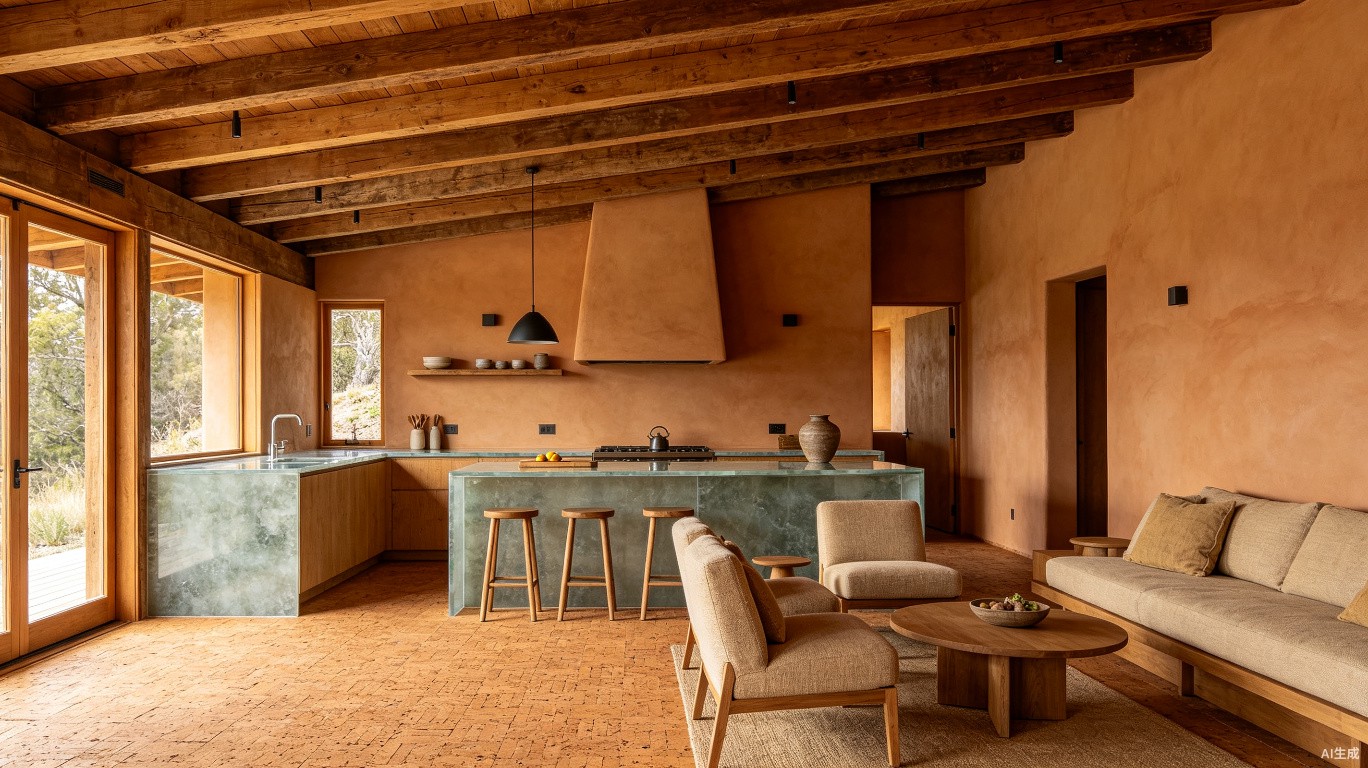

The construction industry accounts for roughly 39 percent of global carbon emissions, with building materials alone responsible for about 11 percent. As homeowners, architects, and builders increasingly prioritize environmental responsibility, the market for sustainable building materials has expanded from a niche offering to a robust sector with competitive pricing and proven performance. Understanding which materials genuinely reduce environmental impact —and which are simply greenwashed —requires looking beyond marketing claims to examine sourcing, manufacturing, transportation, lifespan, and end-of-life disposal. This guide covers fifteen materials that meet rigorous sustainability standards while delivering the durability and aesthetics required for modern construction.
Renewable and Rapidly Regenerating Materials
1. Bamboo is technically a grass, not a wood, and it holds the record for the fastest-growing plant on Earth —some species grow up to 35 inches in a single day. Bamboo reaches harvest maturity in 3 to 5 years compared to 20 to 60 years for hardwood, and harvesting does not kill the plant, which regenerates from its root system. Strand-woven bamboo flooring is harder than red oak and maple, with a Janka hardness rating of 3,000 to 4,000 pounds-force compared to red oak's 1,290. Prices for bamboo flooring range from $3 to $8 per square foot, competitive with mid-range hardwood. Look for FloorScore or GREENGUARD certification to ensure low-VOC adhesives were used in manufacturing.
2. Cork is harvested from the bark of the cork oak tree without harming the tree, which regenerates its bark every 9 to 12 years. Cork flooring is naturally antimicrobial, hypoallergenic, and provides excellent thermal and acoustic insulation —qualities that make it particularly suitable for bedrooms and living areas. The cellular structure of cork contains millions of air-filled pockets that compress underfoot and rebound, creating a comfortable, forgiving surface. Cork flooring costs $4 to $10 per square foot installed and, when sealed properly, can last 25 to 40 years. The primary maintenance requirement is resealing every 3 to 5 years in high-traffic areas.
3. Hempcrete, a biocomposite of hemp hurds (the woody core of the hemp plant), lime binder, and water, is gaining traction as a wall insulation material and alternative to concrete in non-structural applications. Hemp absorbs more CO2 during its 4-month growth cycle than is emitted during hempcrete production, making the material carbon-negative over its lifecycle. Hempcrete provides an R-value of approximately 2.5 per inch, which is lower than spray foam but offset by its thermal mass and moisture-regulating properties. It is naturally fire-resistant, pest-resistant, and mold-resistant. Hempcrete is typically cast in place around a timber frame and finished with lime plaster, costing $15 to $25 per square foot of wall area.
Recycled and Reclaimed Materials
4. Reclaimed wood sourced from deconstructed barns, factories, warehouses, and even submerged river logs offers a sustainability story and irreplaceable character. Old-growth lumber, harvested from forests that no longer exist, often has tighter grain patterns and greater density than new lumber from fast-grown plantation trees. Reclaimed wood flooring and paneling costs $8 to $20 per square foot depending on species, condition, and origin. When purchasing reclaimed wood, verify that the material has been kiln-dried to kill any insects or larvae and tested for lead paint, which older painted wood may contain. FSC Recycled certification confirms the reclaimed origin of the material.
5. Recycled steel requires 60 to 75 percent less energy to produce than virgin steel and can be recycled indefinitely without loss of strength or quality. In residential construction, recycled steel is used for structural beams, roofing, wall studs, and deck framing. Steel framing is dimensionally stable —it does not warp, twist, or shrink like wood —and is impervious to termites and rot. The primary disadvantage is thermal bridging: steel conducts heat readily, so careful insulation detailing is essential. Steel studs and track made from recycled content cost roughly 30 percent more than wood studs but deliver superior long-term performance, particularly in humid or termite-prone regions.
6. Recycled glass countertops and tiles transform post-consumer and post-industrial glass into surfaces that rival quarried stone in durability and aesthetics. Recycled glass countertops from companies like IceStone and Vetrazzo are composed of 70 to 100 percent recycled glass suspended in a cement or resin binder, available in a wide range of colors and aggregate sizes. These countertops cost $50 to $120 per square foot installed, comparable to mid-range quartz. Recycled glass tiles for backsplashes and accent walls cost $15 to $40 per square foot and are available in brilliant, light-reflecting colors that brighten interiors.
7. Reclaimed brick salvaged from demolished buildings carries a patina and color variation that new brick cannot replicate. The embodied energy in an existing brick has already been spent, so reusing it avoids the energy-intensive firing process required for new brick. Reclaimed brick costs $0.50 to $2 per brick —comparable to or less than new face brick —and installation labor is similar. The primary challenge is sourcing enough matching brick for a large project; reclaimed brick dealers typically batch bricks by color and texture, but some variation is inevitable and, for many designers, desirable.
Low-Carbon and Alternative Materials
8. Rammed earth construction compresses a mixture of soil, gravel, sand, silt, and a small amount of cement or lime into solid, load-bearing walls. The resulting walls are 18 to 24 inches thick, providing exceptional thermal mass that regulates indoor temperatures by absorbing heat during the day and releasing it at night. Rammed earth walls require minimal maintenance, are fireproof, and can last centuries —structures built with this technique in China and North Africa have stood for over 1,000 years. The primary constraint is cost: rammed earth walls cost $50 to $150 per square foot of wall area in North America, primarily due to the specialized labor required for formwork and compaction.
9. Mycelium-based materials, grown from the root structure of fungi, represent one of the most innovative frontiers in sustainable construction. Mycelium composites can be grown into rigid panels, insulation blocks, and even furniture components within days using agricultural waste as a growth substrate. At end of life, mycelium materials are fully compostable. Current applications are limited to non-structural interior panels, acoustic tiles, and insulation, but research into structural mycelium composites is advancing rapidly. Mycelium insulation panels, from companies like Ecovative, cost $2 to $5 per square foot and achieve R-values of 3 to 4 per inch.
10. Cross-laminated timber (CLT) is an engineered wood product that layers lumber in alternating directions and bonds them with structural adhesives, creating panels as strong as concrete at a fraction of the weight. CLT allows mid-rise and even high-rise buildings to be constructed from wood, a renewable material that sequesters carbon. A cubic meter of CLT stores approximately one ton of CO2. CLT panels are prefabricated off-site with precise CNC cutting, reducing construction waste and shortening build times by 20 to 30 percent. CLT costs $30 to $50 per square foot of floor area for the panels alone, competitive with concrete and steel when factoring in the faster construction schedule.
Natural Insulation and Finishes
11. Sheep wool insulation is a natural, renewable alternative to fiberglass and mineral wool. Wool fibers are crimped, creating millions of tiny air pockets that provide an R-value of 3.5 to 3.8 per inch. Wool also absorbs and releases moisture without losing insulative performance, which helps regulate indoor humidity. It is naturally fire-resistant —wool chars rather than ignites —and does not require the chemical flame retardants found in some synthetic insulation. Wool insulation costs $1.50 to $3 per square foot for batts, roughly twice the price of fiberglass, but installers do not need protective equipment, reducing labor costs.
12. Natural clay plaster and lime plaster replace synthetic paints and finishes with breathable, low-toxicity wall coatings. Clay plaster, composed of natural clays, aggregates, and pigments, creates a soft, matte surface with subtle color variation that synthetic paints cannot replicate. It absorbs and releases moisture, helping to regulate indoor humidity, and it contains no VOCs. Lime plaster, made from slaked lime and aggregates, is more durable and moisture-resistant than clay plaster and is suitable for bathrooms and kitchens. Applied clay plaster costs $8 to $15 per square foot installed; lime plaster ranges from $12 to $20 per square foot.
13. Paperstone and recycled paper countertops are made from post-consumer recycled paper and a petroleum-free resin, creating a dense, durable surface that resembles soapstone. The material is non-porous, heat-resistant to 350 degrees Fahrenheit, and can be sanded and refinished if scratched. Paperstone countertops cost $50 to $80 per square foot installed and are available in a range of dark, saturated colors. The manufacturing process uses no water and generates no hazardous waste, making Paperstone one of the most environmentally responsible countertop options available.
Certifications and Selection Principles
14. Environmental Product Declarations (EPDs) provide transparent, third-party-verified data about a material's environmental impact across its entire lifecycle, from raw material extraction through manufacturing, transportation, use, and end-of-life disposal. An EPD is not a certification of sustainability per se —it is a standardized report card that allows meaningful comparison between products. When comparing two materials, look for EPDs that follow the same Product Category Rules (PCR) to ensure the data is comparable. Architects and builders increasingly require EPDs for material selection on LEED and Living Building Challenge projects.
15. Cradle to Cradle certification evaluates products across five categories: material health, material reutilization, renewable energy and carbon management, water stewardship, and social fairness. A product achieves one of five levels —Basic, Bronze, Silver, Gold, or Platinum. This certification is particularly valuable because it evaluates the entire supply chain, not just the finished product. When selecting sustainable building materials, Cradle to Cradle Silver or higher certification provides the most comprehensive assurance of environmental and social responsibility. Products must be recertified every two years, preventing companies from resting on past achievements.