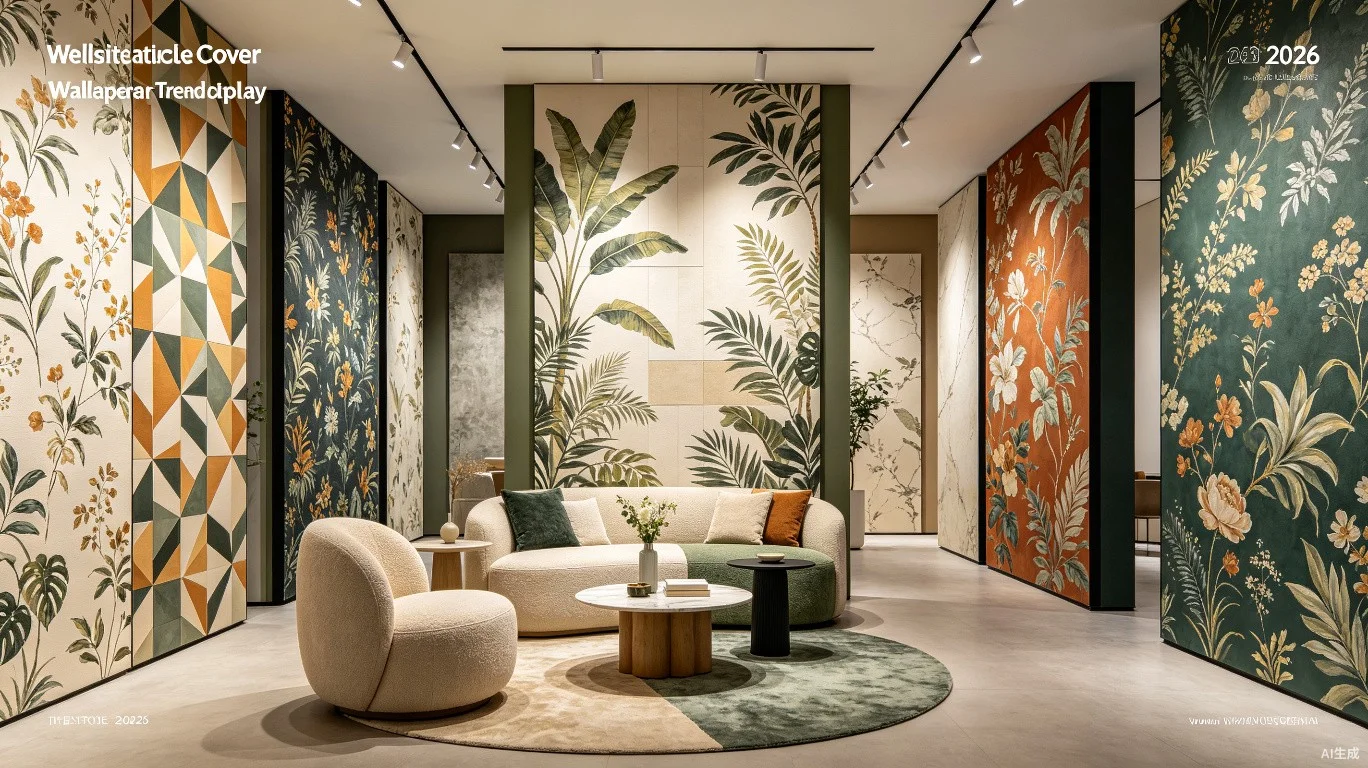

Wallpaper has staged a spectacular comeback, evolving far beyond the dated floral borders of decades past. In 2026, wallpaper is about bold self-expression, immersive environments, and textures you cannot achieve with paint alone. Here are thirteen expert tips for navigating this year's hottest wallpaper trends.
Pattern Trends
1. Oversized botanical prints are the defining wallpaper trend of 2026, with palm fronds, monstera leaves, and tropical foliage dominating at scales that would have seemed absurdly large just five years ago. These maximalist patterns work best as a single feature wall behind a bed or sofa. The key is choosing prints where the individual motifs measure at least 12-18 inches across for true visual impact.
2. Mural wallpapers that depict entire landscapes, city skylines, or abstract compositions across multiple panels have become enormously popular. Unlike traditional repeat patterns, murals are printed as a single image across several rolls that must be hung in exact sequence. The result is a wall transformed into art, with the most dramatic examples depicting misty forests, dramatic mountain ranges, or dreamy cloudscapes.
3. Geometric and Op Art patterns are resonating with those who prefer a more structured, mid-century modern aesthetic. Hexagons, chevrons, concentric circles, and tessellating shapes in high-contrast color combinations create walls that appear to vibrate with energy. These patterns work exceptionally well in home offices, powder rooms, and other spaces where you want to make a strong, confident statement.
Material Innovations
4. Peel-and-stick wallpaper has matured into a genuinely viable option, with major brands like Tempaper and Spoonflower offering hundreds of designs on removable, repositionable vinyl or fabric-backed materials. Modern peel-and-stick wallpapers install without paste, remove without residue, and can last 5-10 years when properly applied to smooth, clean walls. They are the ideal solution for renters and commitment-phobic decorators.
5. Grasscloth wallpaper, made from natural fibers like jute, hemp, sisal, and arrowroot hand-woven onto a paper backing, brings organic texture and warmth that no printed paper can match. Each panel is unique due to the natural variations in the fibers. Grasscloth is elegant and timeless but absorbs moisture -- avoid it in bathrooms and kitchens, and expect visible seams between panels.
6. Textured and embossed wallpapers -- including paintable anaglypta and Lincrusta, tin ceiling-style metallic patterns, and raised ink designs -- add tactile dimension to walls. Paintable textured wallpapers are particularly practical: they hide wall imperfections, can be repainted multiple times to change colors, and add architectural interest to builder-grade drywall.
Application Strategies
7. Use wallpaper on the ceiling as the 2026 "fifth wall" trend continues to gain momentum. A textured or subtly patterned wallpaper on the ceiling draws the eye upward, making rooms feel taller and more expansive. For bedrooms, a celestial or cloud pattern above the bed creates a dreamy, cocoon-like atmosphere. For dining rooms, a metallic or subtle geometric ceiling paper reflects candlelight beautifully.
8. Apply wallpaper to the back of bookshelves, cabinets, or alcoves for a small-scale impact with minimal commitment. This technique adds color and pattern exactly where you want visual interest, using only a fraction of a roll. It is also the perfect way to use up that expensive designer wallpaper sample you could not bear to throw away.
9. Create wainscoting-height wallpaper by applying paper only to the lower two-thirds of a wall, topped with a chair rail. This classic approach allows you to use bold, dramatic patterns without overwhelming the room. Pair it with a complementary paint color above for a balanced, traditional look that works in any architectural style.
Practical Considerations
10. Calculate wallpaper quantities carefully. Measure each wall's width and height, multiply for square footage, and subtract large openings (doors, windows). A standard double roll of wallpaper covers approximately 56-60 square feet. Always add 15-20% for pattern matching waste, which increases with larger pattern repeats. For murals, order all panels from the same production batch to ensure color consistency.
11. Prepare walls meticulously before hanging wallpaper. Fill holes and cracks with spackle, sand smooth, and apply a wallpaper primer or sizing to sealed painted walls. Primer creates the ideal surface for adhesion and makes future removal dramatically easier. Attempting to hang wallpaper over textured or poorly prepared walls will result in visible imperfections and eventual peeling.
12. Consider paste-the-wall wallpapers, which have grown in popularity for their easier installation. Instead of booking the wallpaper (folding pasted sides together to activate the adhesive), you simply roll paste directly onto the wall and hang the dry paper onto the wet paste. This method eliminates the mess, space, and timing challenges of traditional paste-the-paper techniques.
13. Invest in the right tools: a sharp utility knife with plenty of replacement blades, a smoothing tool (plastic smoother or soft-bristle brush, never a seam roller which can burnish and shine seams), a plumb line or laser level for the critical first strip, and a wallpaper trough if paste application is required. The difference between a professional result and a DIY disappointment often comes down to using the right tools correctly.